Teaching Yoga in a Resort in Cambodia
I moved to Cambodia with a naive dream: to connect with my roots.
Being born in Paris to Cambodian parents, growing up in France, and studying in Germany. I was constantly asked, ‘Where are you REALLY from?’—a question that replayed like a mantra. Eventually, I just started skipping to the end and answering, ‘Cambodia.’
So, I arrived in Cambodia believing I was fully, “only” Cambodian.
You can imagine my awkward realization when locals asked me that exact same question: ‘Where are you from?’
When I arrived in Phnom Penh, I felt so overwhelmed by the city that I decided to get away from it for some time.
I found a resort in rural Cambodia that needed a Yoga teacher. Located about an hour from Kampong Cham, surrounded by fields, cashew nut plantations, and durian groves: Hanchey.
When I got there, I felt like I was in heaven. Their Yoga shala was stunning, perched on a hill and facing the Mekong River.

Rediscovering my Yoga style
We teach how we practice, and the way I practiced fundamentally shifted during those months at the resort. Not that my routine radically changed (I still practiced the same sequences of postures) but the spirit and rhythm with which I approached them transformed completely.

The resort surroundings and the serene Yoga Shala, gently cradled by a soft and refreshing breeze, were an open invitation to slow down. The oppressive heat of April and May—the hottest and driest months in Cambodia—invited me into slow, deliberate movements and deep, drawn-out breaths.
In that climate, rushing was simply not an option, and my own practice naturally became slower and more meditative. Having trained at The Yoga Institute in Mumbai and through the Iyengar tradition, I already considered my practice to be quite slow and measured, yet this environment brought it to a whole new level of quietness.
During my daily practice, I began taking longer, lingering pauses between each posture. It felt like a true rebirth. We so often tend to practice Yoga with a capitalist mindset: jumping frantically from one pose to the next, trying to maximize every single session, doing as much as physically possible, and completely forgetting the true essence of Yoga: deep relaxation (even in sweaty efforts) and presence.

Practicing Slow Yoga with Travelers and City-Breakers

The beauty of teaching at the resort was the sheer diversity of the guests. I might spend one session with a fifty-something Dutch couple exploring Cambodia by tuk-tuk, the next with a group of young Singaporean friends trying Yoga for the very first time, a French physiotherapist and another with a seasoned Ashtanga teacher from Australia.
I loved finding ways to connect with each of them and adapt the practice to their individual needs. What fascinated me most was watching how different people reacted to the slowness. Many experienced practitioners assume a slower pace means an ‘easier’ class, yet I watched advanced practitionners struggle simply to stay still in a posture. It was a clear reminder that Yoga is not a mechanical execution of poses : it’s an internal discipline.

Yoga is a Privilege
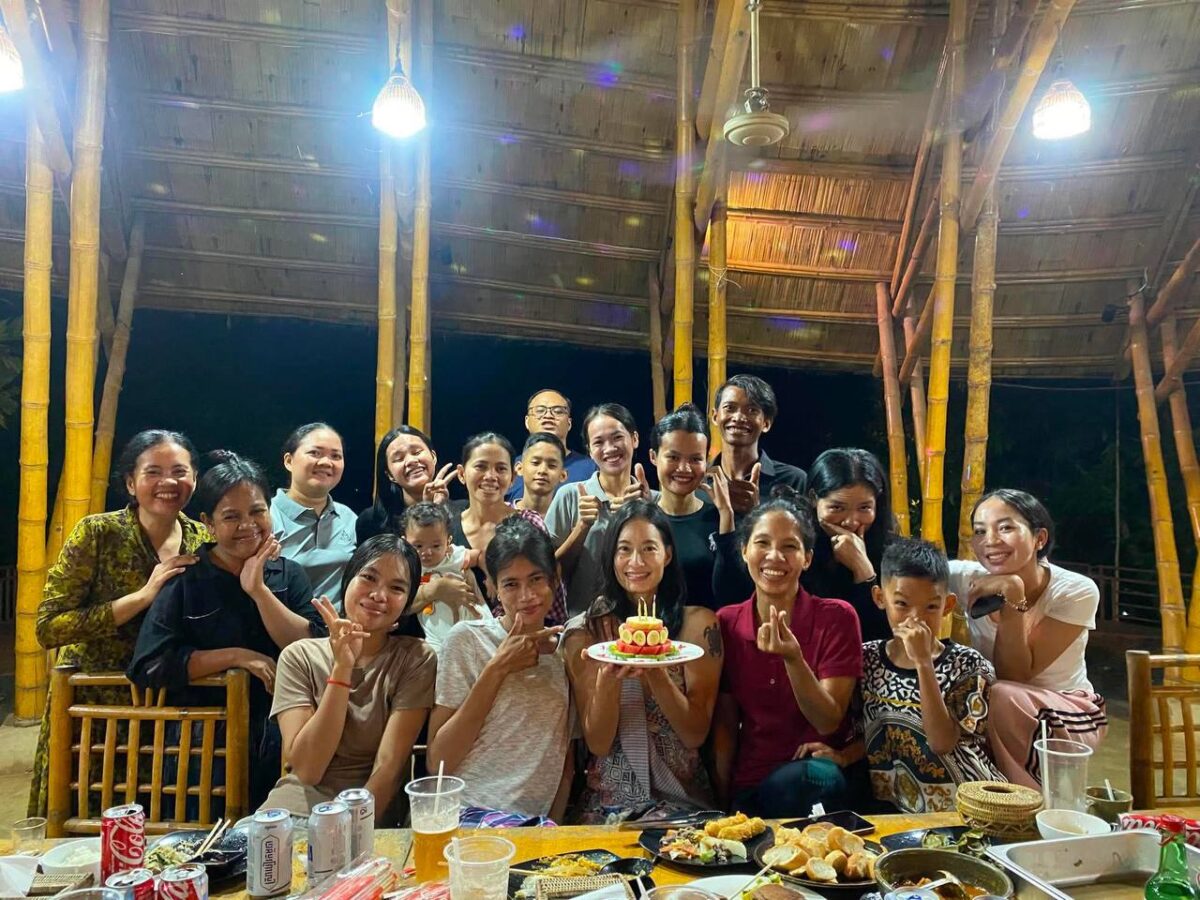
One of the most beautiful gifts from my long stay at the resort was the new family I found among the staff, from the kitchen and restaurant to maintenance and housekeeping.
They felt like brothers and sisters, and much like siblings, we didn’t always have everything in common: for instance, they couldn’t care less about Yoga. I invited them several times to practice, thinking their weary bodies could benefit from a good stretch.
In reality, their daily struggles, motivations, and priorities were the exact antithesis of modern wellness. I quickly realized my rhetoric about Yoga and mindfulness was the very last of their concerns.
The heavy burden of their responsibilities, including caring for young children while living hours away from them, left no room for the luxury of wanting to feel ‘light and flexible’.
Having spent much time in Yoga communities where we all shared the same ideals about wellness and practice, I was now discovering a whole new dimension of humanity, one grounded in the realities of a developing country.
They didn’t practice Yoga on a mat, but through their resilience, generosity, and capacity to share a laugh together at the end of a long and exhausting day, they taught me a far deeper form of presence.
More Than Yoga: Confronting My Family’s Past in Cambodia
Ultimately, my time at the resort transformed far more than just my physical practice or my teaching.
Walking on Cambodian soil, the very ground stained by the unspeakable cruelty and mass killings of the Khmer Rouge era, where my own family lost half of its members confronted me with ghosts and deeply buried traumas I didn’t expect to face.
But that is a story for the next chapter…

Last posts
Yoga and Cycling : How Yoga Made Be A Better Cyclist
Part I: The Body — How Yoga Complements Cycling How yoga can improve mobility, body awareness and balance on and off the bike. I used to think that cyclists in [...]
My week at the Divine Life Society (Sivananda Ashram) : Part III
"Sow love, reap peace. Sow meditation, reap wisdom" - Swami Sivananda From Hatha Yoga to Bhakti Yoga I practise Yoga postures (Yoga Asanas) almost every day, even if it’s just [...]
My week at the Divine Life Society (Sivananda Ashram) : Part II
“Fewer the thoughts, greater the peace.” Swami Sivananda Arrival at the Ashram After a long journey by bus and then by rickshaw, I arrived in front of this orange facade [...]
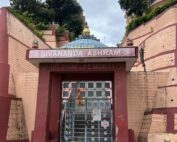
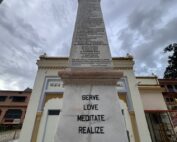
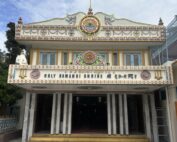
My Week at the Divine Life Society (Sivananda Ashram, Rishikesh) Part I
"Let your eyes look with kindness, your tongue speak with sweetness, and your hand serve with softness" Swami Sivananda During my last trip to India, I had the incredible opportunity [...]
Serving a Vipassana Course: The Ultimate Yoga Practice
Anyone who has completed a 10-day Vipassana course alongside a dedicated yoga practice will tell you: Vipassana is the holy grail of Yoga. You can read about my first Vipassana [...]

Yoga Is Not Everything
When I chat with students or people who would like to start Yoga, I sometimes hear: "I need to do yoga." This use of the word "need" makes me thoughtful. [...]

Beyond the Postures: Svadhyaya and the Practice of Looking Within
"svādhyāyād iṣṭadevatā-samprayogaḥ" Sutra II.44, Yoga Sutras, Patanjali "From self-study comes communion, or alignment, with one's chosen deity or higher ideal" This sutra (verse) gives the explanation of the concept of [...]


Teaching Yoga in a Resort in Cambodia
I moved to Cambodia with a naive dream: to connect with my roots. Being born in Paris to Cambodian parents, growing up in France, and studying in Germany. I was [...]


Is Yoga A Sport?
Yoga Is Not a Sport - Said My Doctor I started Yoga with a few irregular sessions in a yoga studio in North Shore Auckland and online. At the time, [...]
My First Vipassana Retreat
On a quiet night beneath the Bodhi tree, Gautama Buddha closed his eyes—not to escape the world, but to see it so clearly that suffering itself dissolved. My journey from [...]