
My week at the Divine Life Society (Sivananda Ashram) : Part III
“Sow love, reap peace. Sow meditation, reap wisdom” – Swami Sivananda
From Hatha Yoga to Bhakti Yoga
I practise Yoga postures (Yoga Asanas) almost every day, even if it’s just a few meditative or relaxing asanas.
When I arrived at the Sivananda Ashram, I assumed asana practice would be given just as much importance as chanting. You can imagine my disappointment when I discovered there were no asana classes available for women at the time.
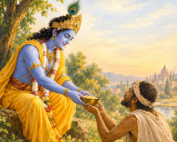
My personal view and practice of yoga puts the physical body at the center, just as traditional Hatha Yoga does. But here at the ashram, everything gravitated toward prayer, chanting, and more chanting. In fact, one of the hall has a 24/7 chanting of Hare Krishna, Hare Rama. This was Bhakti Yoga: the yoga of devotion.
My stay at the ashram was the perfect opportunity to step out of my comfort zone and explore the discomfort of devotion. I must admit that even after reading an entire book on Bhakti Yoga at the library, I wasn’t entirely convinced. Bhakti remained deeply mysterious to me. After all, Bhakti was meant to be experienced, not debated or intellectualized.
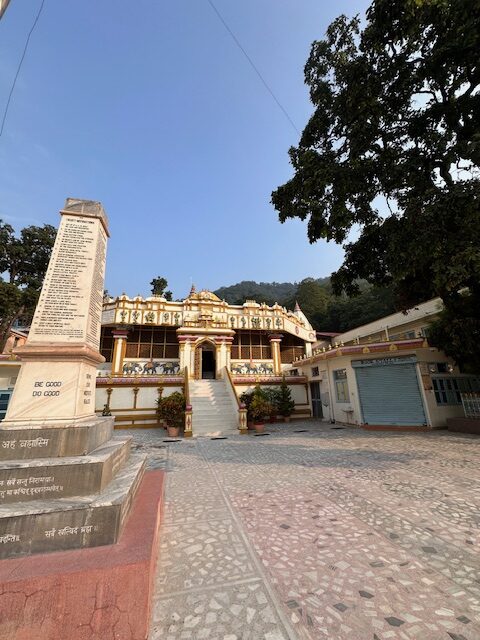
Trying Bhakti Yoga
The first evening I participated in the Satsang – a sacred gathering where practitioners sit together in community to chant, pray and reflect on spiritual teachings – I was overcome with discomfort. I felt completely out of place. Everyone around me seemed completely elated by the sounds of the Swamis chanting. They recited the Shlokas (verses) of the Bhagavad Gita with a devotion and fervor that felt far too intense for me.
I have been to several 10 days meditation retreat before and was used to stay seated on the floor for hours. However, here I felt uncomfy and upset to be seated on the floor for so long.
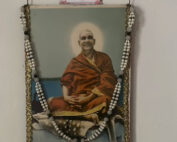
I have to admit that the decoration of the room, the Samadhi Hall, made me feel a little uncomfortable. It felt like a real cult of personality: paintings of the founder everywhere, and even a life-size statue of him above our heads.
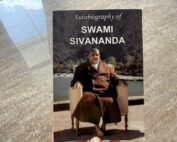
The next day, I decided to read the autobiography of Swami Sivananda. After all, I knew almost nothing about the founder or the person whose sanctuary I was benefiting from. Reading about his life and his vision opened my eyes. Sivananda’s words spoke directly to my heart and soul. His entire life was dedicated to serving others, living the path of Yoga, and spreading its wisdom. His courage and determination were, in a way, the reason I was able to practice Yoga and find this liberating path today.
The paintings, his face, and his words scattered throughout the ashram suddenly made sense. Instead of unnerving me, they inspired me and served as a reminder of his extraordinary legacy.
I felt a renewed motivation to fully experience my week at the ashram. I decided to surrender to the ashram’s practices, philosophy, and the deep reverence surrounding Swami Sivananda.
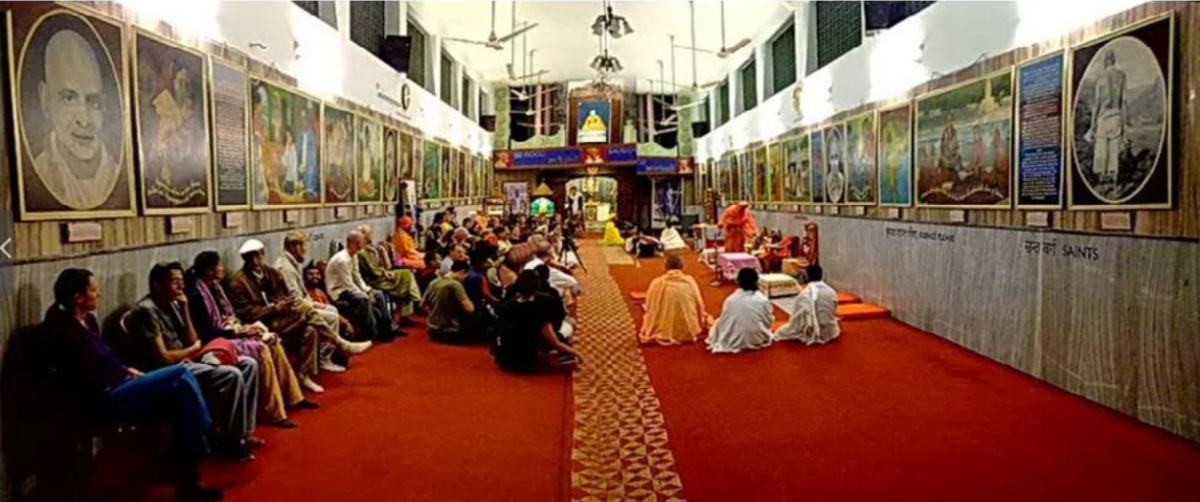
Surrendering
Slowly, the concept of surrendering took on a whole new shape. I had heard it so many times as a Yoga student and shared it as a teacher, yet I realized I had never actually lived it until now.
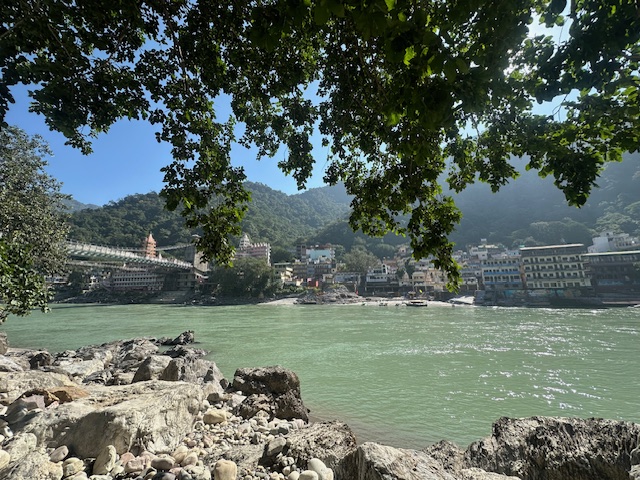
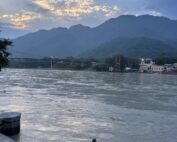
Being immersed in the serenity of the ashram, surrounded by holy practitioners, and starting each day meditating by the Ganga certainly helped. I doubt I could have cultivated the humility to surrender in a bustling city like Paris or London.
The key was a shift in perspective—the very shift in vision Swami Sivananda described in one of his books. I realized I didn’t need to surrender to an abstract or unfamiliar deity. I was simply surrendering to novelty and mystery.
The moment I understood this, a sense of lightness washed over me. Here, surrendering was about detaching from the familiar. It meant letting go of the rigid certainties and subtle arrogance that had kept me closed-minded toward ways of practicing yoga outside my own.
In Patanjali’s Yoga Sutras, this concept is known as Ishvara Pranidhana—the practice of releasing the ego’s need for control and trusting something larger than your individual mind. Rather than blind submission, it is about softening resistance, letting go of the outcome, and finding quiet peace.
Out of curiosity and fascination, I had been to Kirtan sessions (devotional chanting) before, where some people were dancing as if in trance. Ever since, I linked devotion exclusively to these overly restless and ecstatic practitioners.
Here at the Sivananda Ashram, Bhakti felt different. Though the Swamis sang in unison and with great fervor, most people were, just like me, sitting quietly with their eyes closed, softly murmuring or singing along. I realized devotion didn’t require loud chanting, dancing, or jumping. Experiencing it quietly within was Bhakti Yoga, too. Had I been practicing it all along : turning inward away from the world’s noise, choosing depth over display?
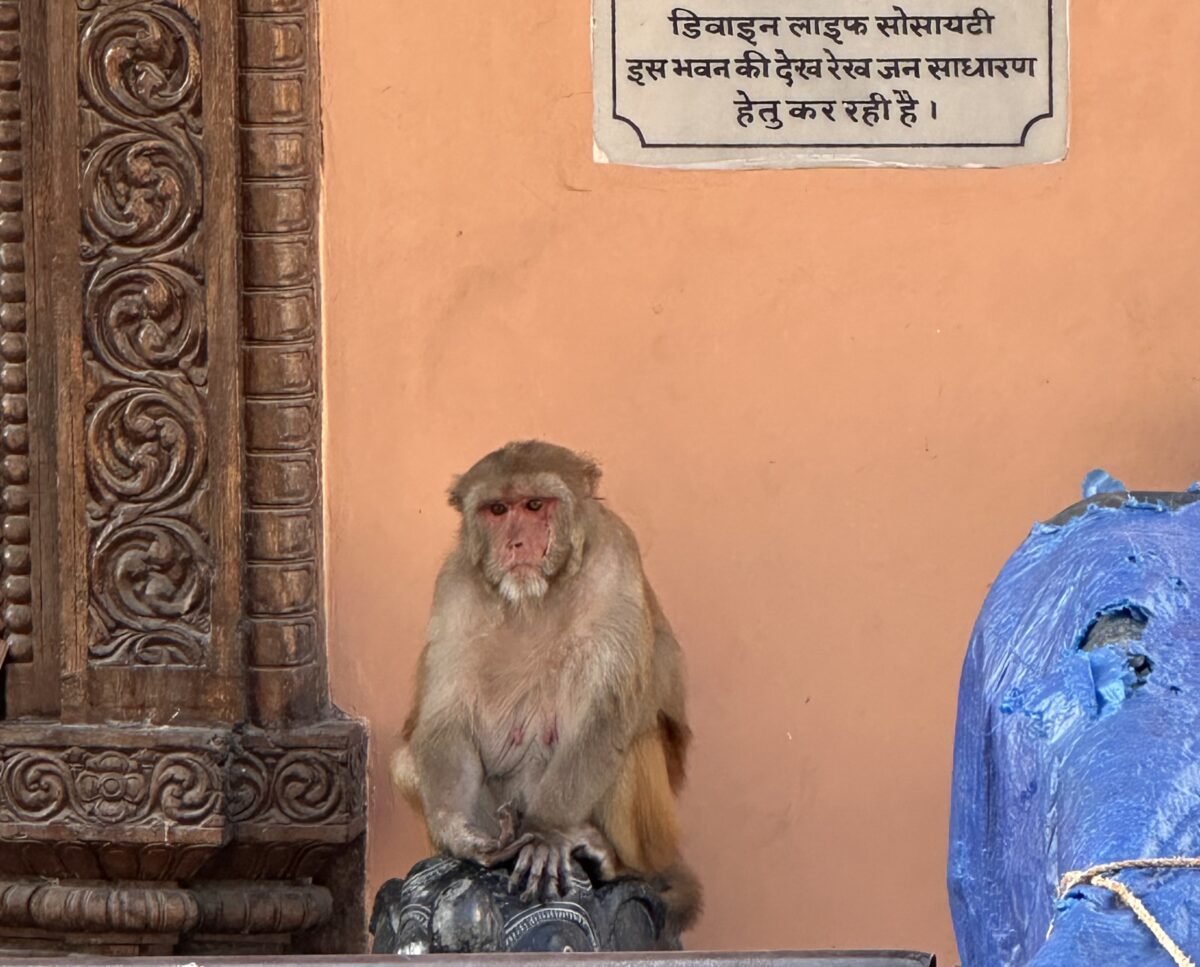
Every evening until I left, I returned to the Samadhi Hall for Satsang, feeling more at home with each passing night. I didn’t need to know anyone’s name; people arrived and departed constantly.
The lightness that settled over me each night wasn’t a newfound faith in a new deity. It was the relief of shedding old prejudices. In the past, I had judged other people’s faith and practices.
In that still and serene ashram, you hear your own thoughts clearly. I realized those judgmental voices weren’t mine : they were echoes of the society and the community I grew up in, a culture that felt superior for having neither Gods nor faith. Slowly, those voices were no longer mine and receded further into the background as the shlokas of the Bhagavad Gita began to resonate in my heart.
Bhagavad Gita — Chapter 2, Verse 55
प्रजहाति यदा कामान् सर्वान् पार्थ मनोगतान्।
आत्मन्येवात्मना तुष्टः स्थितप्रज्ञस्तदोच्यते॥
prajahāti yadā kāmān sarvān pārtha mano-gatān
ātmany evātmanā tuṣṭaḥ sthita-prajñas tadocyate
Translation:
“When one lets go of all clingings and mental attachments, finding quiet contentment within the self alone—then one is said to be grounded in steady wisdom.”
Concluding,
Don’t they say : everything happens for a reason. In the bus from Delhi, on my way to the Sivananda Ashram, I met Saloua, a Moroccan-American woman who had been traveling around India for six months. We spoke about Bhakti Yoga as I shared my doubts about staying at a center dedicated to devotion. Her advice opened my eyes:
“Bhakti is simply about opening your heart.”
Her six months of travel had clearly opened hers. She had been an atheist before her journey. Talking with her for hours, I could feel the sincere beauty and warmth of her heart. So I took her advice to heart and decided to try Bhakti Yoga, sitting every evening in the Samadhi Hall.
My heart opened. I didn’t just surrender to some God. Here, surrendering was letting go of the thoughts, ideas, and rigid concepts we once mistook for the Truth.
You don’t need to travel to an ashram in India to open your heart. While certain environments certainly help, it comes down to trying new things: meeting people outside your usual social circle, and facing new perspectives, especially those you may have previously looked down upon. That is how you truly face yourself and break free from the prejudices holding you back.
Leaving the ashram,
Before leaving, I bow to the statue of Swami Sivananda.
Upon my arrival, I would have felt uncomfortable bowing to a statue of a man I knew nothing about. But after a week at the ashram, I could feel the serenity and authentic Yoga he breathed into people’s hearts. I will be honest, not everything and everyone was perfect. As a woman traveling on her own, I still encountered lingering stares, sometimes condescending, even within these sacred walls. Yet beneath it all, I felt the unmistakable lightness and purified hearts of those who live here, and of those passing through like me.
As I bow one last time, my heart overflows with gratitude. I bow to Swami Sivananda for dedicating his lifetime to sharing the gift of Yoga. I also bow to the Moroccan-American woman on the bus who gave me the wisest advice when I needed it most. I bow to Rani, thanks to whom I was able to stay at the ashram.
And I bow to the sacred Ganga River, who has brought so much peace to my soul ever since I first came to her shores years ago. Lastly, I bow to the timeless lineage of Yoga and meditation teachers whose teachings continue to offer a path toward a clear mind and an open heart.
Last posts
Yoga and Cycling : How Yoga Made Be A Better Cyclist
Part I: The Body — How Yoga Complements Cycling How yoga can improve mobility, body awareness and balance on and off the bike. I used to think that cyclists in [...]
My week at the Divine Life Society (Sivananda Ashram) : Part III
"Sow love, reap peace. Sow meditation, reap wisdom" - Swami Sivananda From Hatha Yoga to Bhakti Yoga I practise Yoga postures (Yoga Asanas) almost every day, even if it’s just [...]

My week at the Divine Life Society (Sivananda Ashram) : Part II
“Fewer the thoughts, greater the peace.” Swami Sivananda Arrival at the Ashram After a long journey by bus and then by rickshaw, I arrived in front of this orange facade [...]
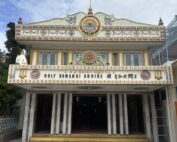
My Week at the Divine Life Society (Sivananda Ashram, Rishikesh) Part I
"Let your eyes look with kindness, your tongue speak with sweetness, and your hand serve with softness" Swami Sivananda During my last trip to India, I had the incredible opportunity [...]
Serving a Vipassana Course: The Ultimate Yoga Practice
Anyone who has completed a 10-day Vipassana course alongside a dedicated yoga practice will tell you: Vipassana is the holy grail of Yoga. You can read about my first Vipassana [...]

Yoga Is Not Everything
When I chat with students or people who would like to start Yoga, I sometimes hear: "I need to do yoga." This use of the word "need" makes me thoughtful. [...]

Beyond the Postures: Svadhyaya and the Practice of Looking Within
"svādhyāyād iṣṭadevatā-samprayogaḥ" Sutra II.44, Yoga Sutras, Patanjali "From self-study comes communion, or alignment, with one's chosen deity or higher ideal" This sutra (verse) gives the explanation of the concept of [...]


Teaching Yoga in a Resort in Cambodia
I moved to Cambodia with a naive dream: to connect with my roots. Being born in Paris to Cambodian parents, growing up in France, and studying in Germany. I was [...]


Is Yoga A Sport?
Yoga Is Not a Sport - Said My Doctor I started Yoga with a few irregular sessions in a yoga studio in North Shore Auckland and online. At the time, [...]
My First Vipassana Retreat
On a quiet night beneath the Bodhi tree, Gautama Buddha closed his eyes—not to escape the world, but to see it so clearly that suffering itself dissolved. My journey from [...]