
Yoga and Cycling : How Yoga Made Be A Better Cyclist
Part I: The Body — How Yoga Complements Cycling
How yoga can improve mobility, body awareness and balance on and off the bike.
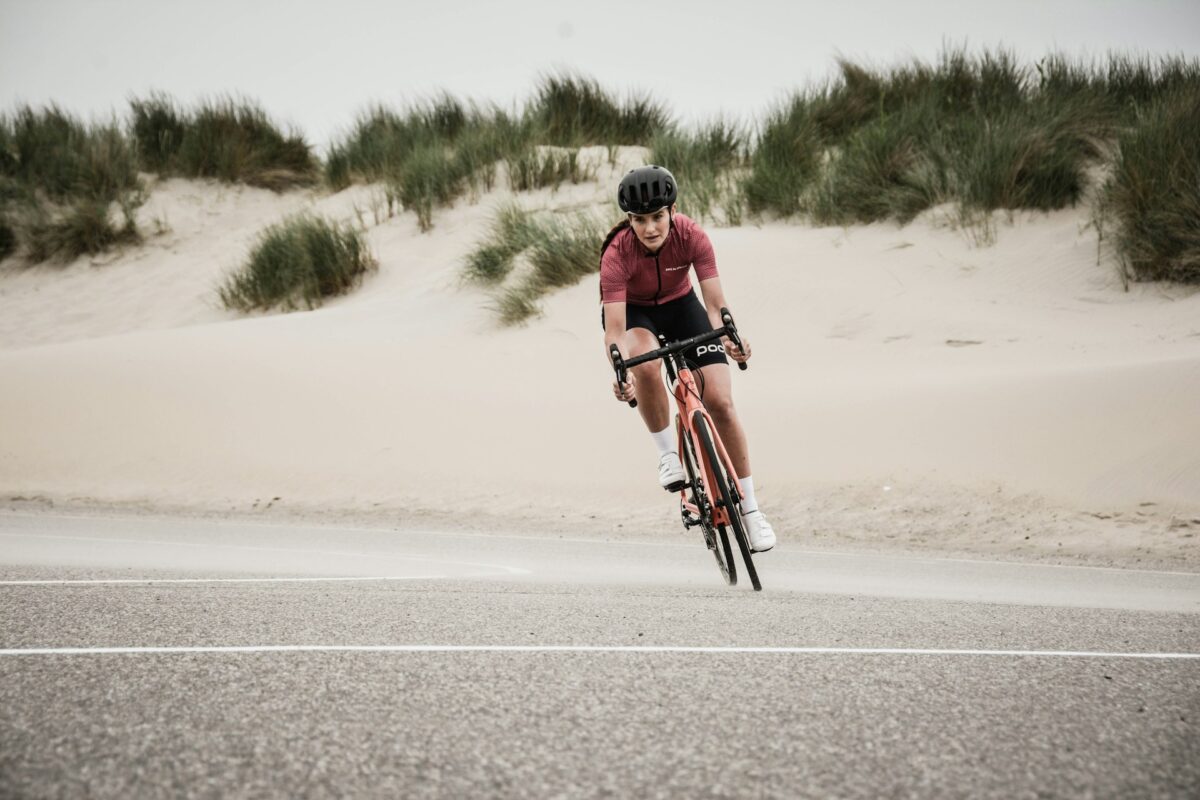
I used to think that cyclists in Lycra—often called MAMLs (Middle-Aged Men in Lycra)—were entirely obsessed with performance and blind to the beauty around them. You would see them on their lean, fast machines, bent aggressively forward, eyes fixed firmly on the asphalt.
Little did I know that I would become one of them. (Well, not a middle-aged man, at least.)
I started cycling because my Yoga teacher from India inspired me after she rode across New Zealand’s South Island. I gave it a try. And my life changed.
There is something genuinely exhilarating about taking a road bike out on the open road. The cadence. The legs driving with power. That hunched posture isn’t simply stubbornness; it’s a physical communion with the machine, a fluid connection in which bike and rider move as one.
Sure, sometimes it’s all about the metrics, the performance, and the numbers on the smartphone. But on longer rides, once you settle into a sustainable rhythm, something else happens. You begin to notice the sweeping landscapes, the changing light, and the world beyond the handlebars. You discover places you might never reach on a city bike.
All right, I’m biased.
But what if Yoga could make us better cyclists—not just by improving mobility and strength, but by changing how we experience the ride itself?
Let’s explore how Yoga can support a more balanced, mindful, and sustainable cycling practice.
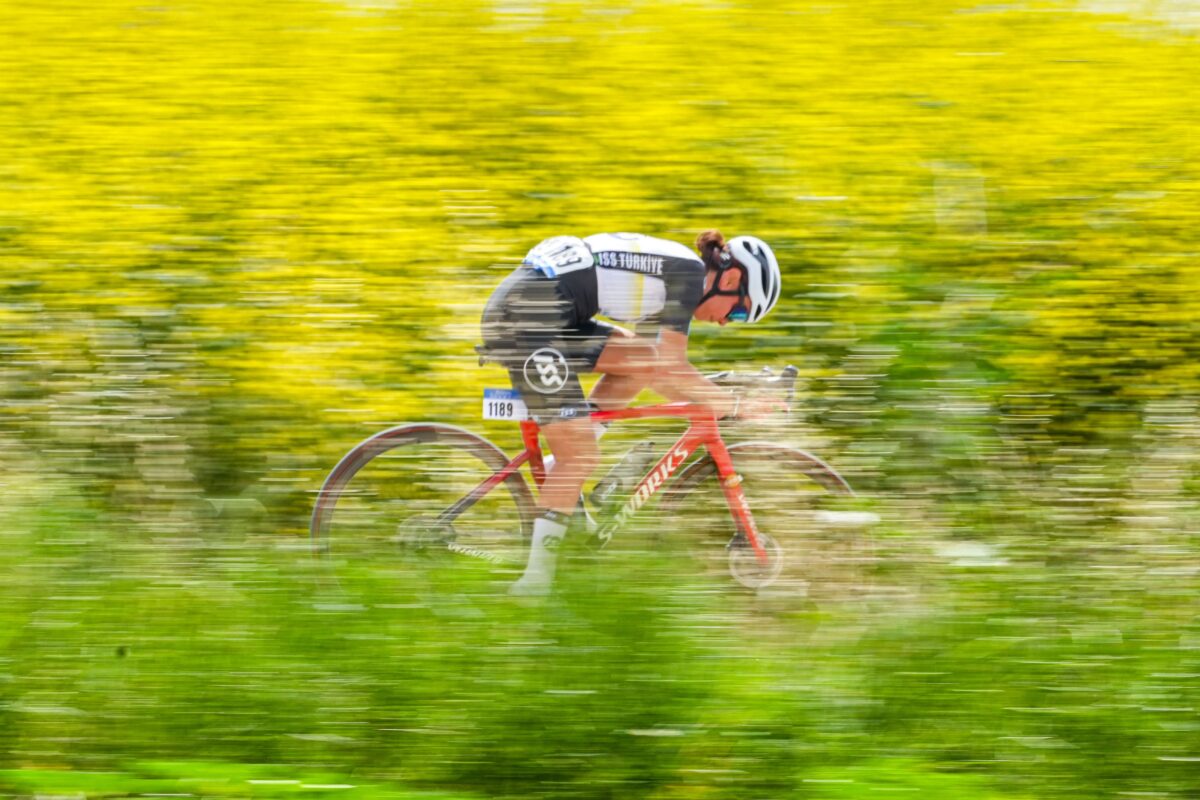
Picture by Ozan Yavuz
1. Counteracting the Demands of the Cycling Position
The fixed shape of the saddle
A road bike is designed for efficiency. The forward-leaning position brings the torso closer to horizontal, allowing the rider to reduce wind resistance and generate power through the pedals.
But efficiency comes with a trade-off: the body spends a considerable amount of time repeating the same movement within a relatively restricted range.
Depending on the bike fit and the rider’s anatomy, the typical road position can involve sustained hip flexion, a forward-leaning trunk, rounded shoulders, and an extended neck as the rider looks ahead. The pelvis and lower back must also adapt to this position while the legs generate thousands of repetitive pedal strokes.
The problem isn’t that this posture is inherently bad. It is that the body may benefit from moving in other directions, too.
This is where Yoga comes in.
Backbending and heart-opening asanas
Backbends happen to be one of my absolute favourite category of asanas, despite having considered them my ultimate torture poses back when my spine felt stiff and resistant.
In a practice dominated by forward movement and hip flexion, gentle spinal extension can provide a welcome change of direction.
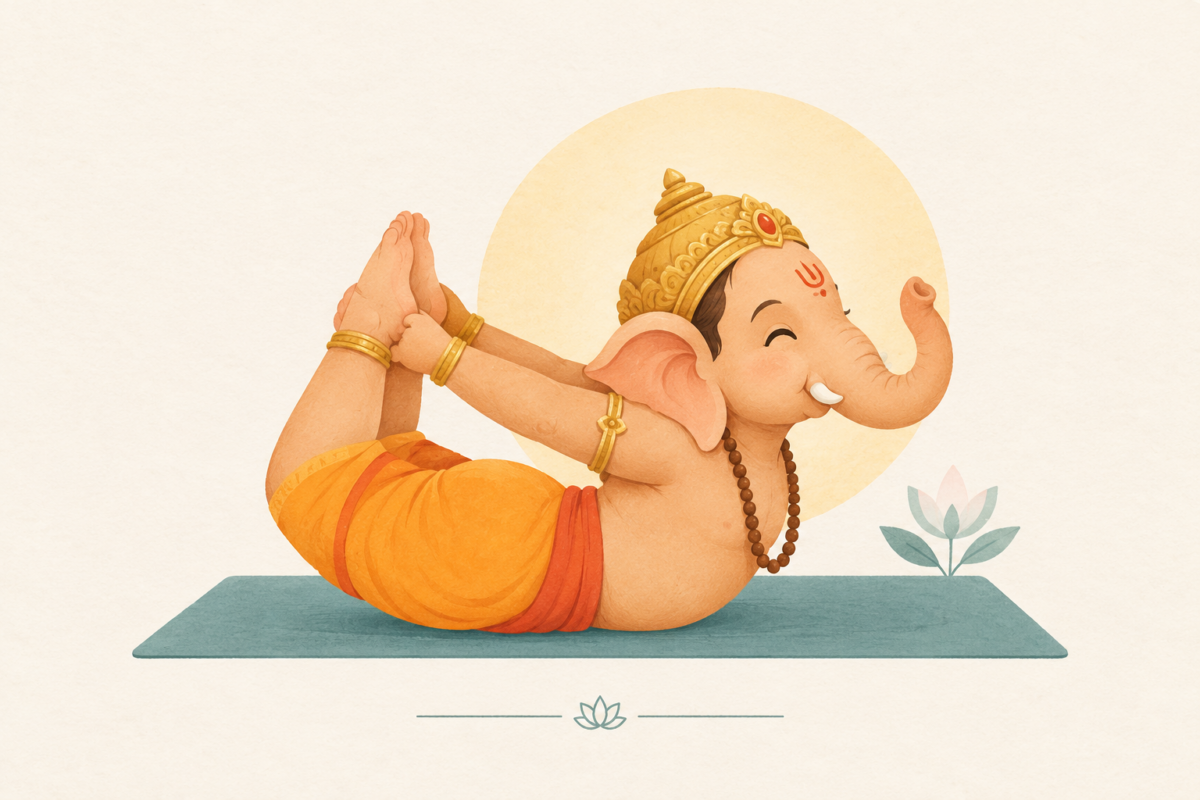 Dhanurasana (Bow Pose) opens the front of the body while engaging the back muscles. The chest lifts, the shoulders move into extension, and the spine extends against gravity. It offers a useful contrast to the forward-leaning position maintained on a road bike.
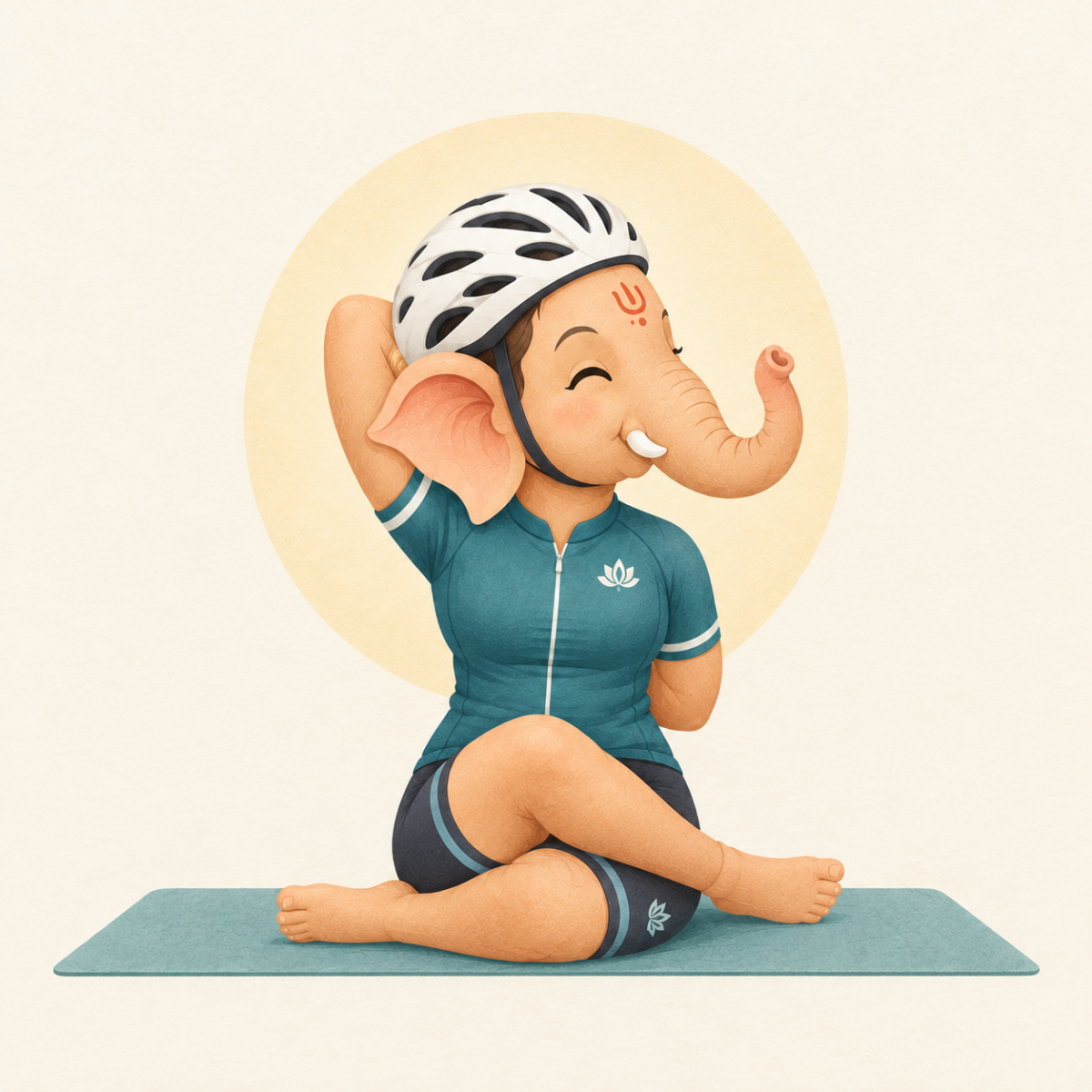 Gomukhasana (Cow Face Pose), particularly its arm position, challenges shoulder mobility and can help address restrictions around the shoulders and upper arms. Depending on the variation, it may also provide a stretch across the chest.
These poses are not magical antidotes to cycling posture. Rather, they introduce movements and ranges of motion that may be underrepresented during long rides.
And that is one of Yoga’s greatest strengths: it reminds us that the body is capable of much more than the one movement we ask it to repeat.
Restoring movement around the hips
The hips are central to cycling. They repeatedly flex and extend as the pedals rotate, while the pelvis and trunk provide a stable platform for power production.
Depending on the bike setup and individual riding mechanics, prolonged cycling may leave some riders feeling restricted around the front of the hips or stiff through the lower back.
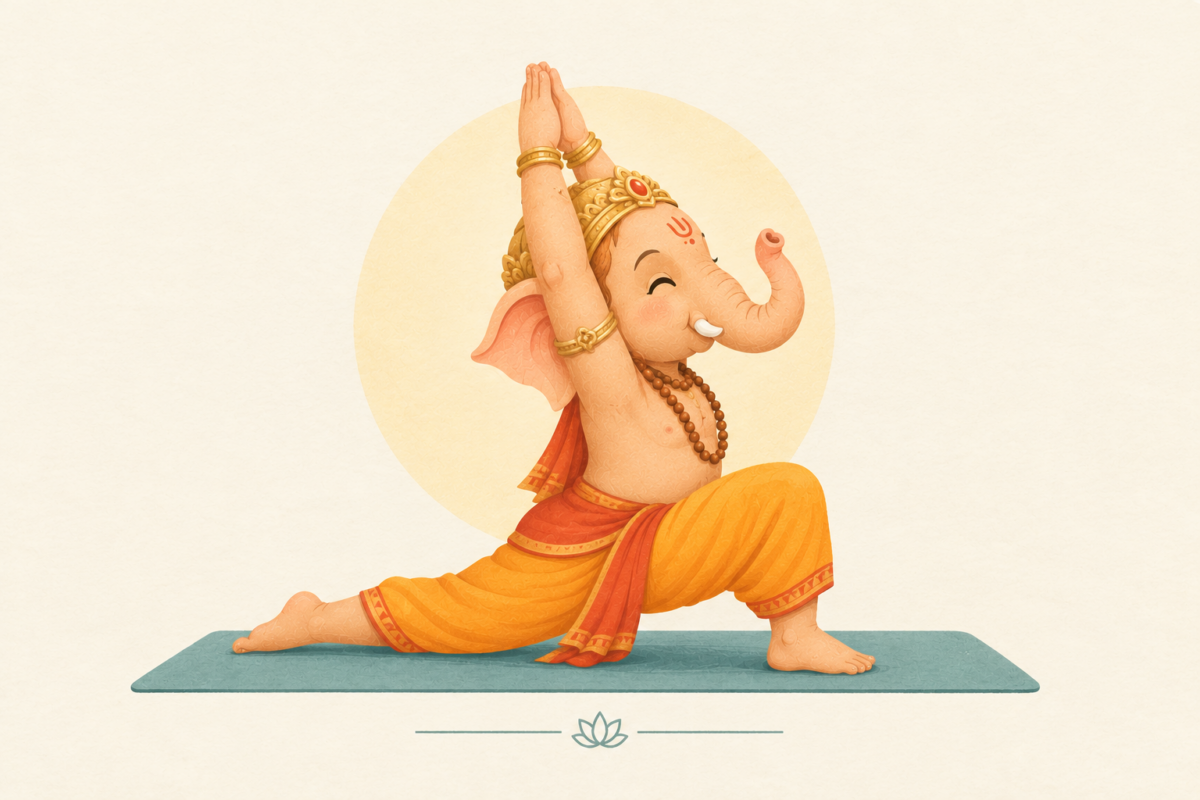 Anjaneyasana (Low Lunge) provides an accessible way to stretch the hip flexors while practising pelvic control. Gently drawing the pelvis towards a neutral position before moving into the lunge can help prevent excessive arching of the lower back.
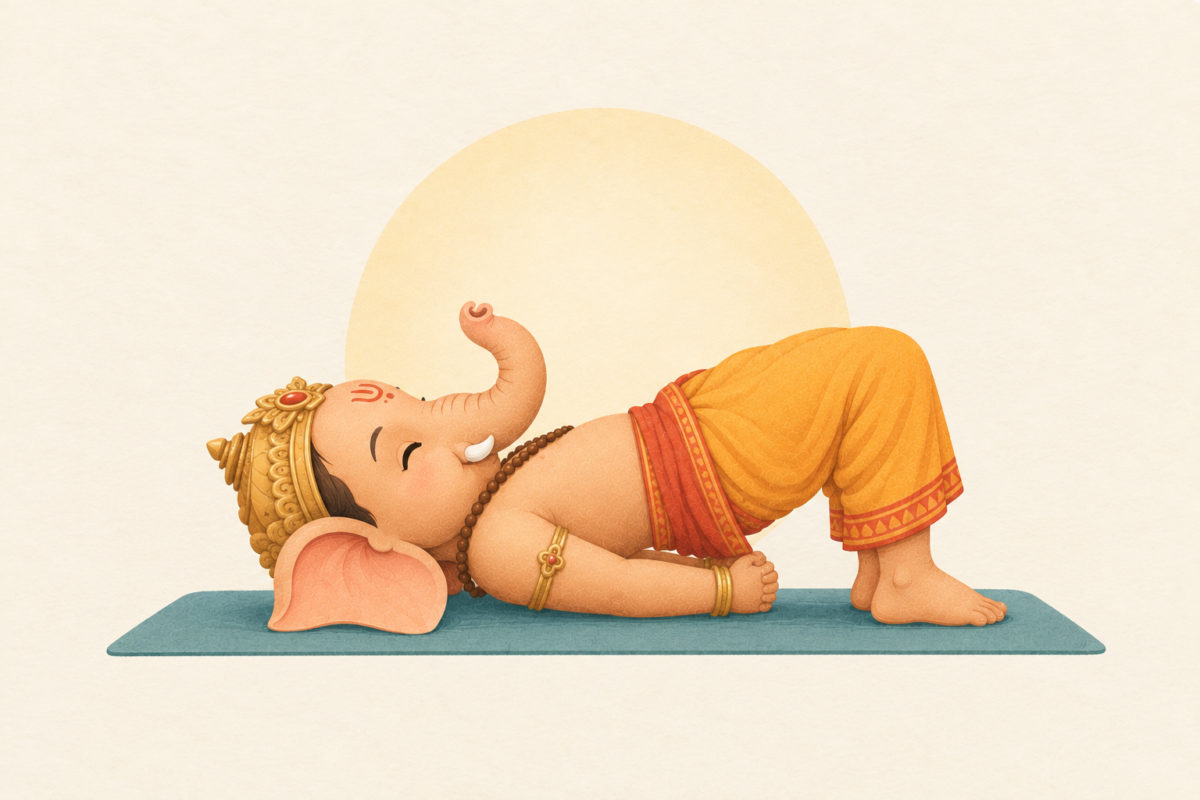
Setu Bandhasana (Bridge Pose) offers a different benefit. Lying on the back and lifting the pelvis challenges the glutes and posterior chain while introducing hip extension.
Together, these poses help explore movement in the opposite direction to sustained hip flexion.
The goal isn’t to force the pelvis into a particular tilt or to assume that every cyclist has the same imbalance. It is to restore options: the ability to move comfortably through different positions rather than remaining accustomed to just one.
2. Soothing Overworked Muscles
Cycling is a beautifully repetitive activity. Unfortunately, the same repetition that makes it efficient can also create areas of discomfort and muscular fatigue.
The lower-body network
Pedalling involves a coordinated team of muscles. The quadriceps contribute substantially to extending the knee, the glutes and other hip muscles help generate power, the hamstrings contribute to hip extension and knee control, and the hip flexors help move the leg through the pedal cycle.
The relative contribution of each muscle changes throughout the pedal stroke and depends on factors such as intensity, cadence, and riding position.
Yoga can complement this repetitive movement with controlled stretching and mobility work.
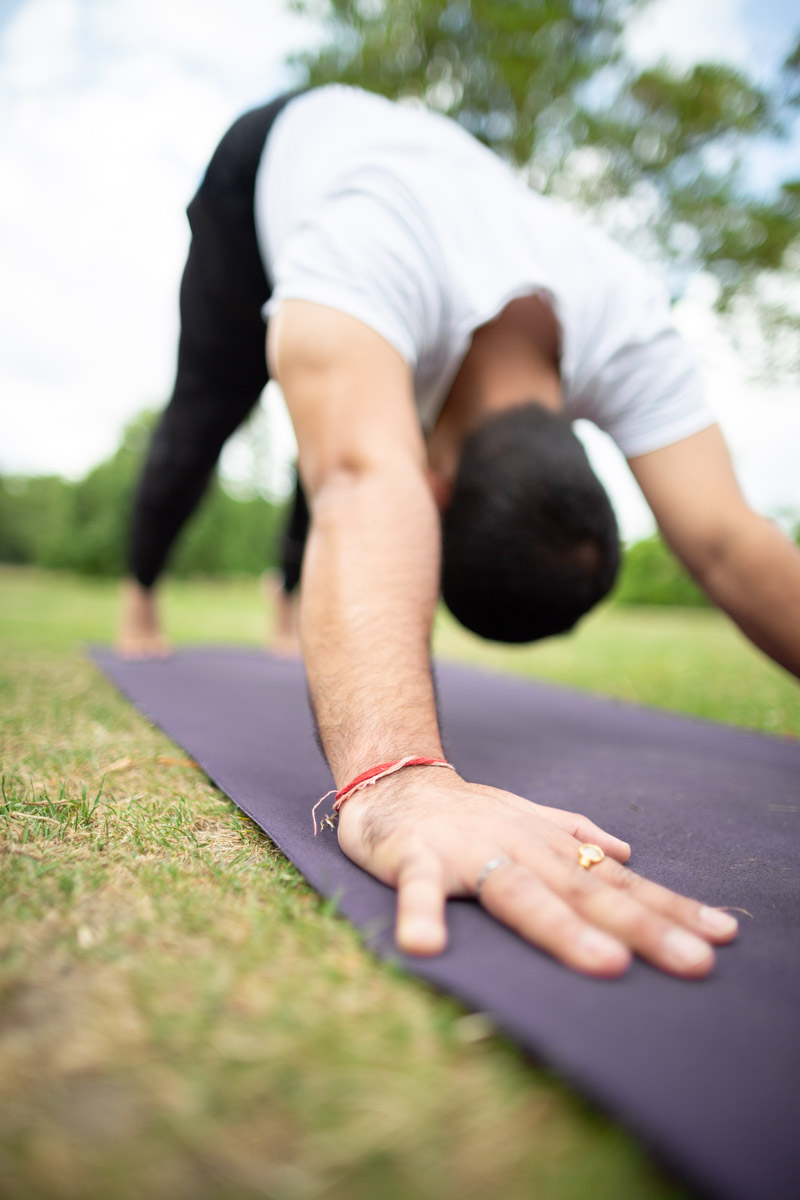
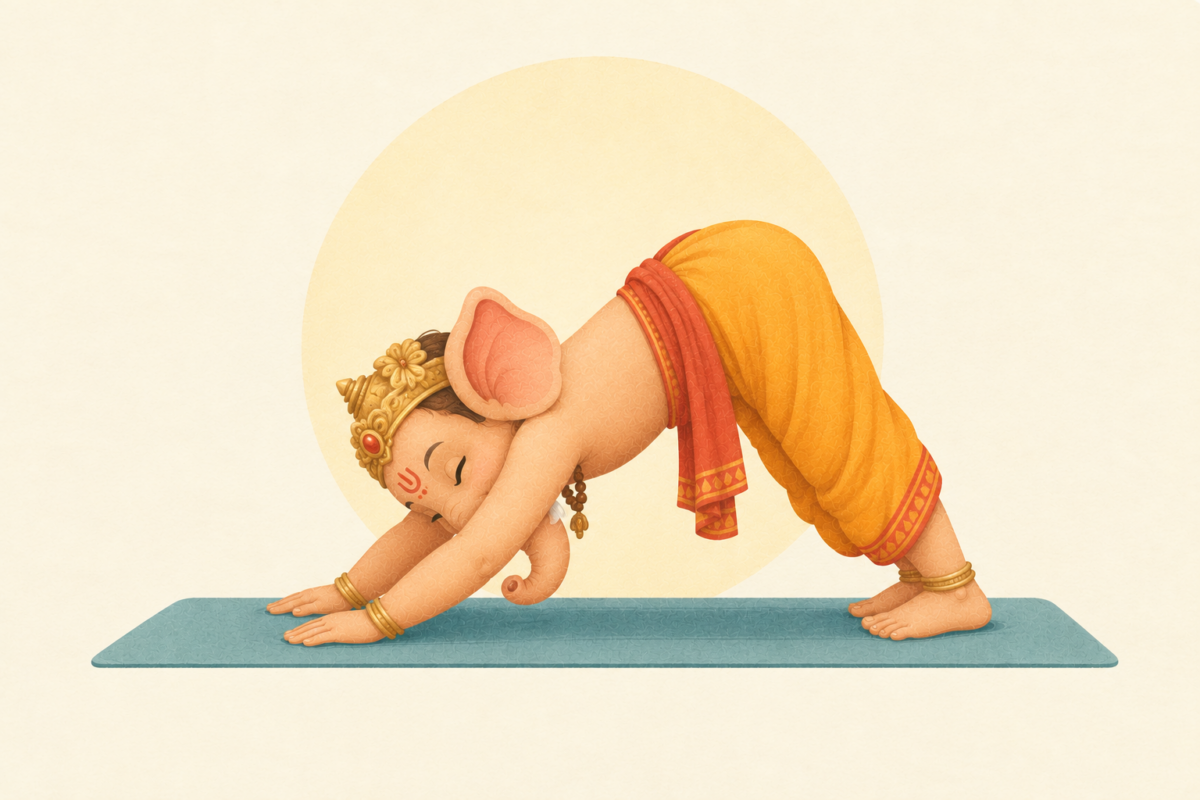 Adho Mukha Svanasana (Downward-Facing Dog) provides a weight-bearing stretch through the shoulders and posterior chain, including the calves and hamstrings, depending on how the pose is performed.
Standing forward folds can also lengthen the hamstrings, although they should be adapted if they provoke discomfort in the lower back.
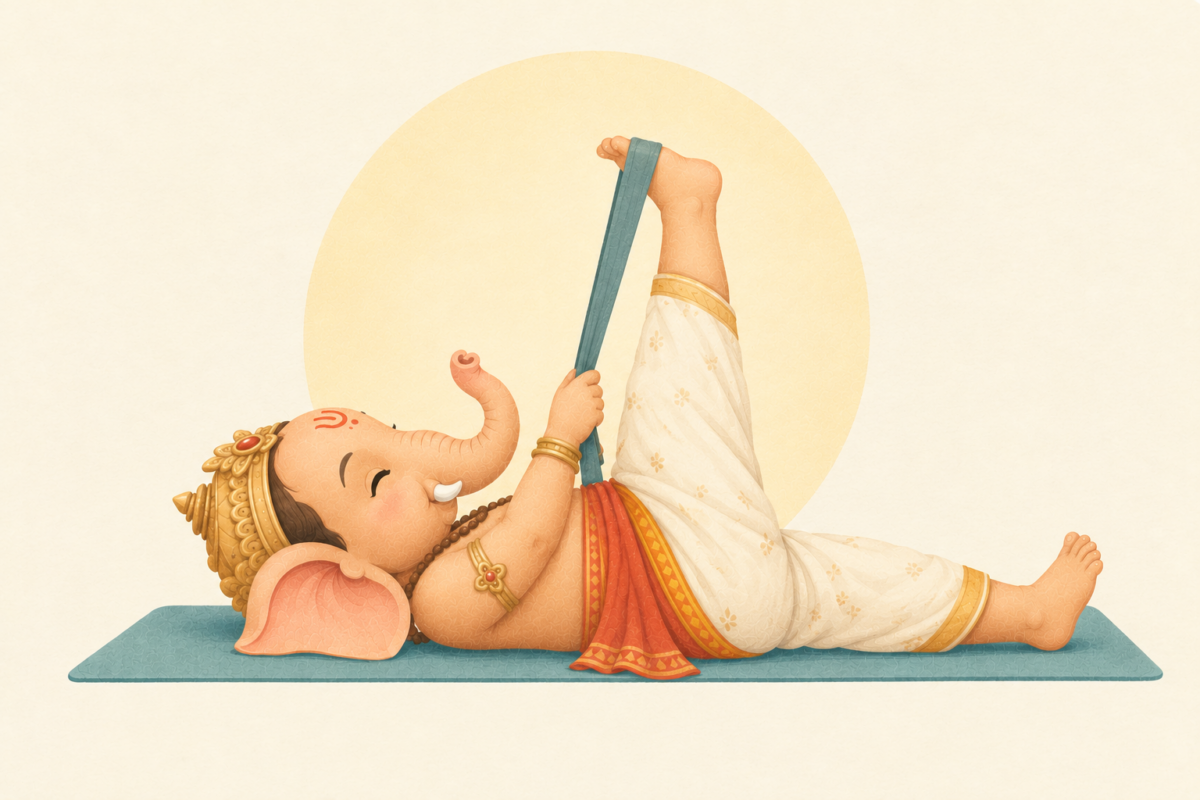
Supta Padangusthasana (Reclined Big Toe Pose) allows you to stretch one leg at a time while lying on your back. Using a strap around the foot makes it easier to control the range without pulling aggressively on the leg or rounding the lower back.
The important distinction is between stretching and forcing. A useful stretch should allow you to breathe comfortably and relax into the position, rather than turning recovery into another competition.
Releasing upper-body strain
Although cycling is predominantly a lower-body activity, the upper body is never entirely passive.
Hours spent holding the handlebars place sustained demands on the shoulders, forearms, hands, and wrists. The neck and upper back must also support the head while the rider looks ahead.
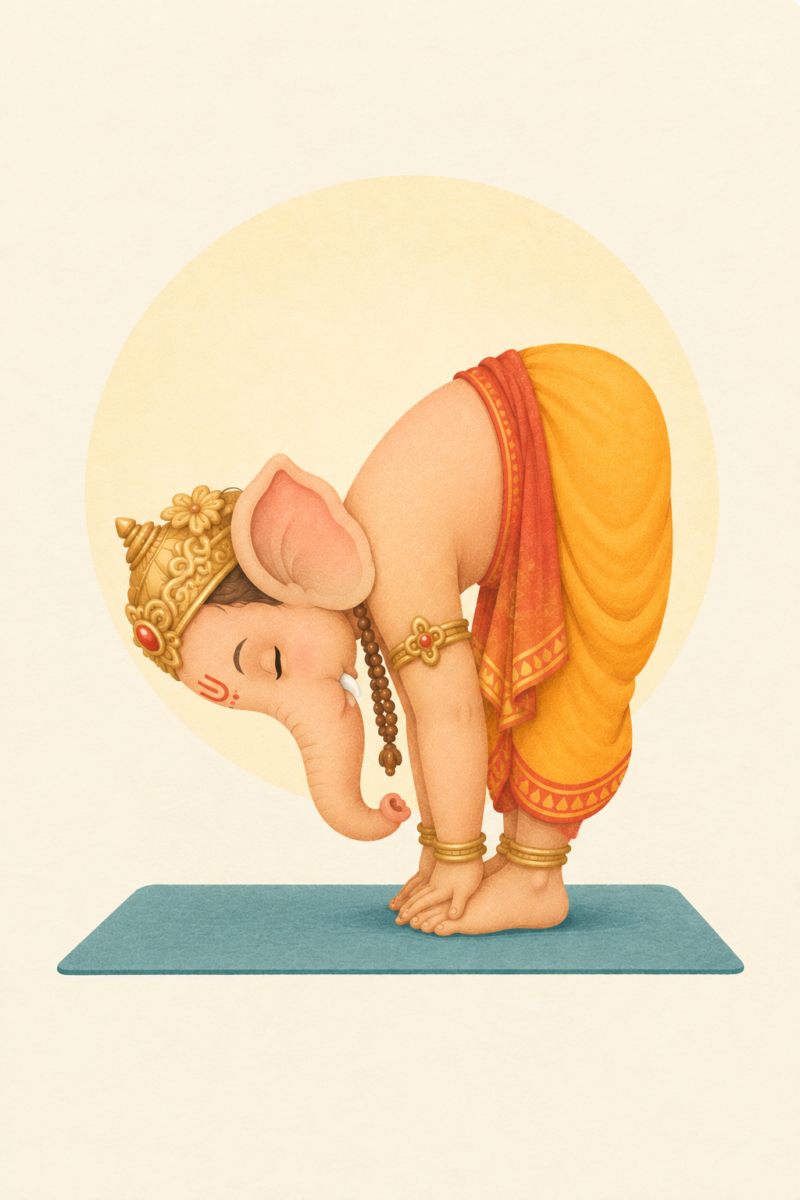 Padahastasana (Hand to Foot Pose) places the palms beneath or on top of the feet in a standing forward fold. It can provide a stretch through the wrists and forearms, although it requires sufficient mobility and should not be forced if the wrists are irritated.
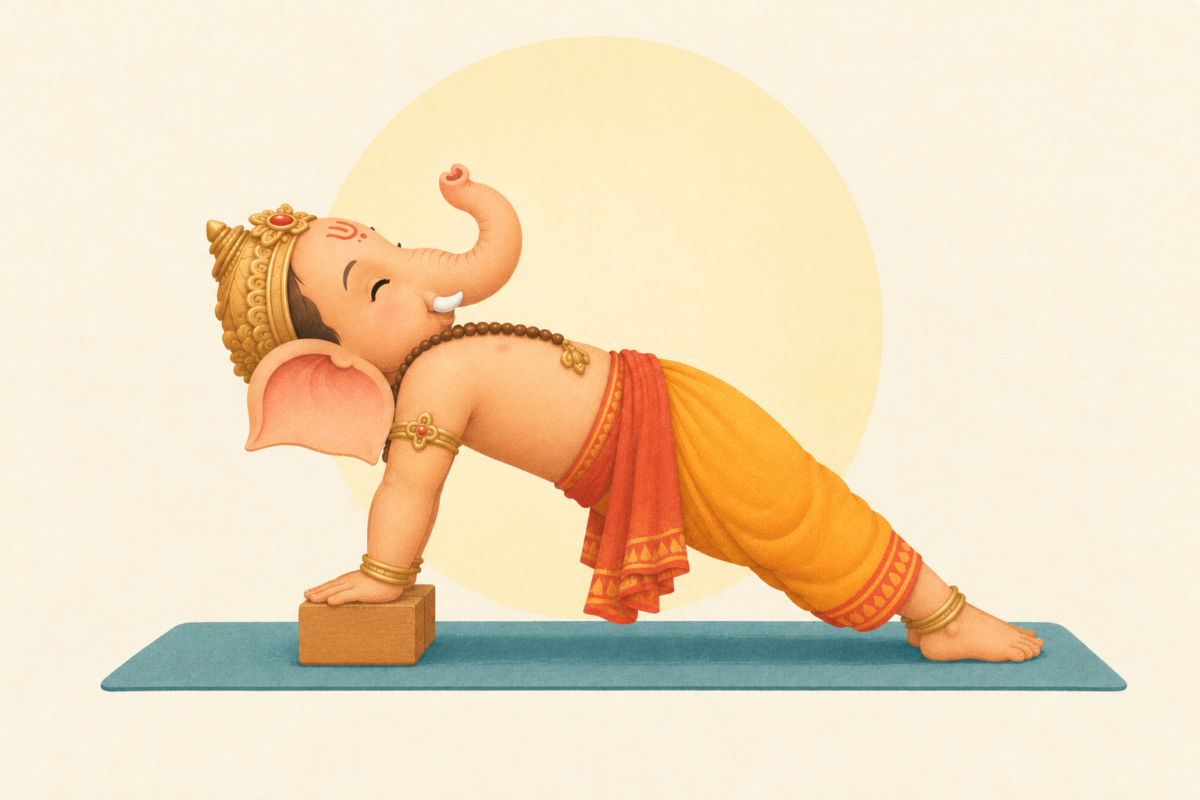 Another interesting option is Purvottanasana (Upward Plank Pose). In this posture, the hands are placed behind the body and the hips lift, creating a strong opening across the front of the shoulders and chest while engaging the posterior chain.
However, Upward Plank also places considerable demands on wrist extension and shoulder mobility. It isn’t necessarily appropriate for someone whose wrists are already sore from cycling.
A supported reverse-tabletop variation or a gentler chest-opening exercise may be a better starting point.
As always, the purpose is to complement the demands of cycling, not to aggravate the very areas we are trying to look after.
Targeting the quadriceps and hip flexors
Cycling repeatedly involves hip and knee movement, and the quadriceps contribute substantially to the work of pedalling. Riders who spend long periods in a relatively closed hip position may also appreciate gentle stretching through the front of the hips and thighs.
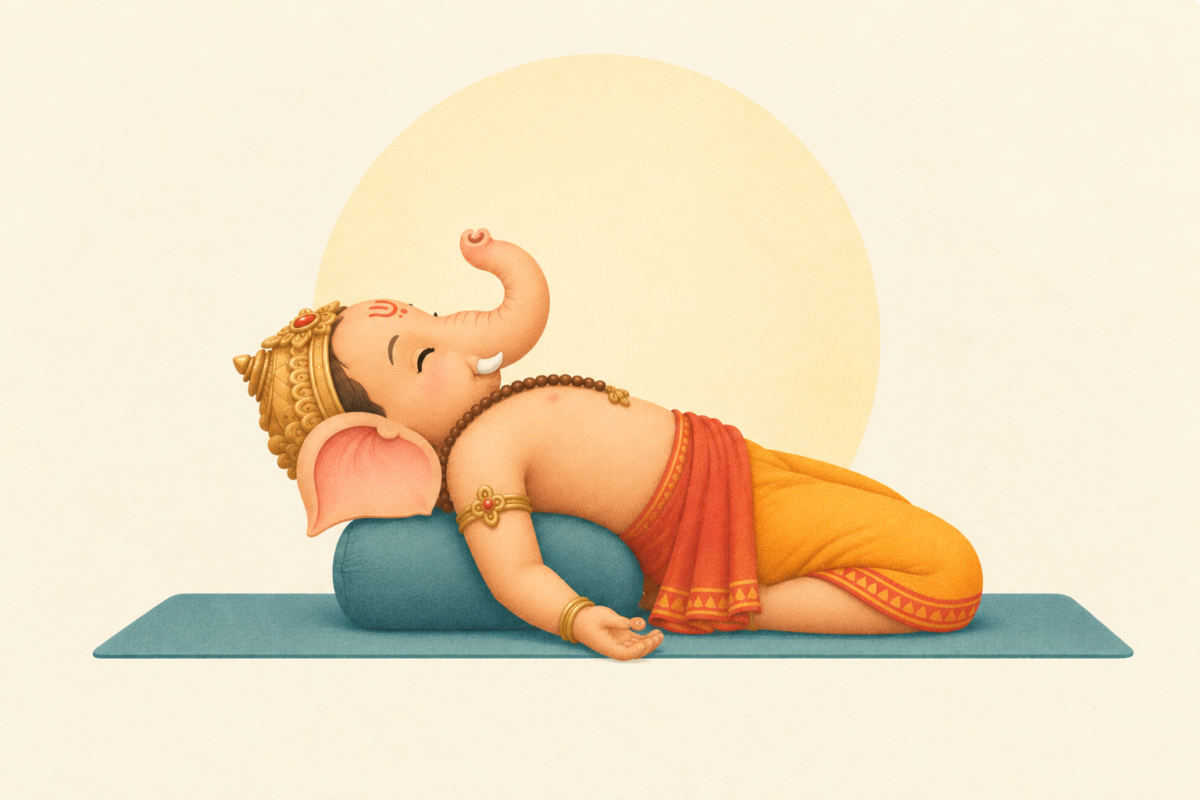 Supta Virasana (Reclined Hero Pose) offers a deep stretch through the quadriceps and front of the thighs. However, it requires considerable knee flexion and can be uncomfortable or unsuitable for some practitioners. It should never be forced, especially if there is a history of knee pain.
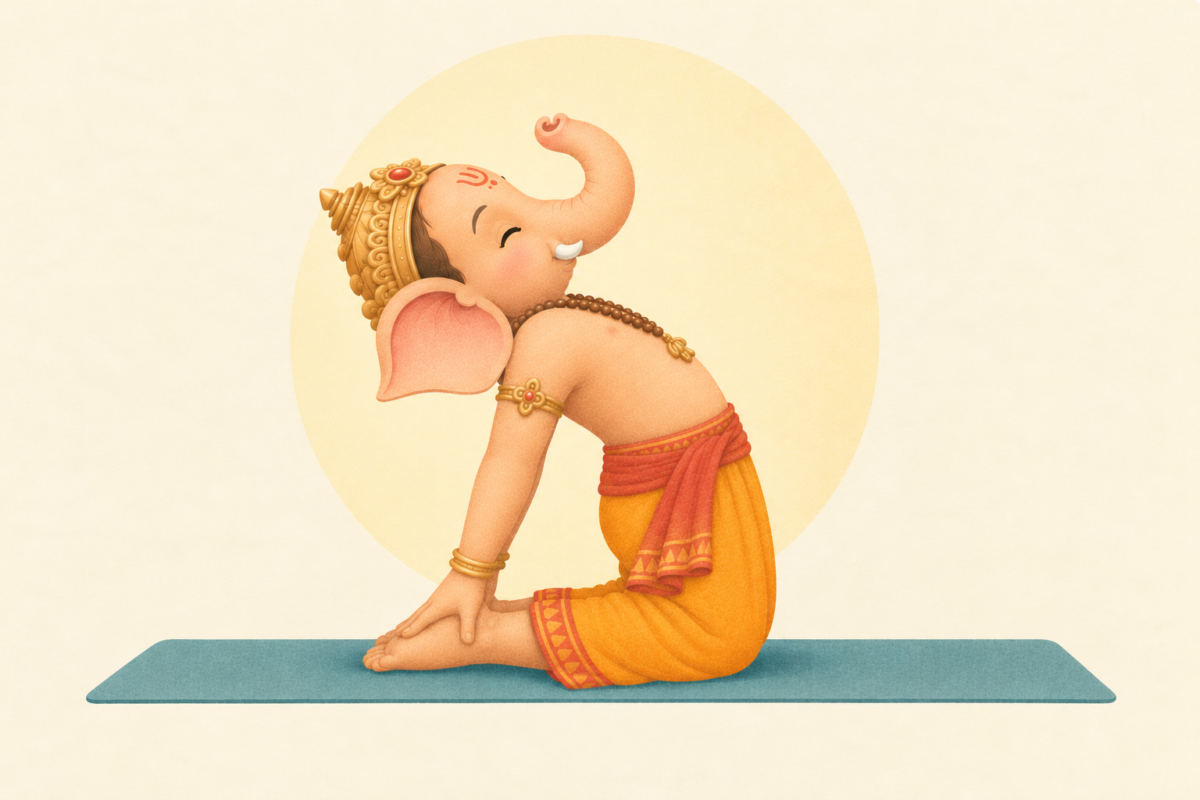
Ustrasana (Camel Pose) offers another way to explore spinal extension and hip extension while opening the front of the body. It also requires attention to the lower back and should be adapted to individual mobility.
These are not poses to perform simply because a cyclist is supposed to have tight quadriceps. The best practice begins by identifying what your own body needs.
Sometimes that means a deep stretch. Sometimes it means a gentler variation. And sometimes the wisest choice is to skip the pose altogether.
3. Training the Muscles Cycling Doesn’t Challenge as Much
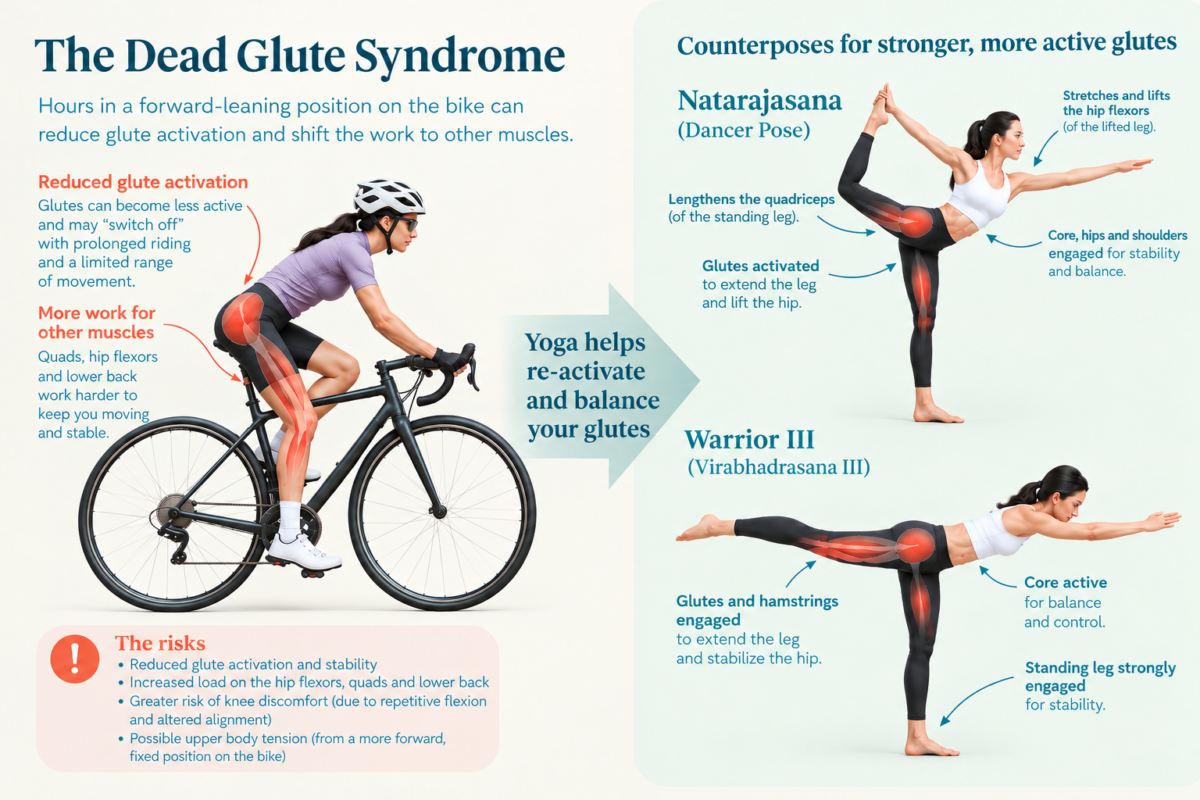
Beyond the so-called dead butt
Cycling involves thousands of repetitions within a relatively predictable movement pattern. Although the glutes work hard during pedalling, cycling does not necessarily train every aspect of hip strength, lateral stability, or single-leg balance equally.
The popular expression “dead butt syndrome” is often used to describe a perceived lack of gluteal engagement. It isn’t a formal diagnosis, and cyclists’ glutes certainly aren’t universally asleep.
Nevertheless, there is a useful point behind the expression: strong cycling legs alone do not guarantee well-rounded hip strength and control.
When the demands of a task exceed a person’s capacity, the body distributes the work among the available muscles and joints. Fatigue, training load, technique, and bike fit can all influence how this happens.
Yoga offers opportunities to train balance, single-leg stability, and muscular control alongside the repetitive strength developed on the bike.
Yogic solutions for the weak links
The ancient yoga tradition wasn’t developed specifically to correct cycling biomechanics. Yet many asanas challenge qualities that complement cycling remarkably well.
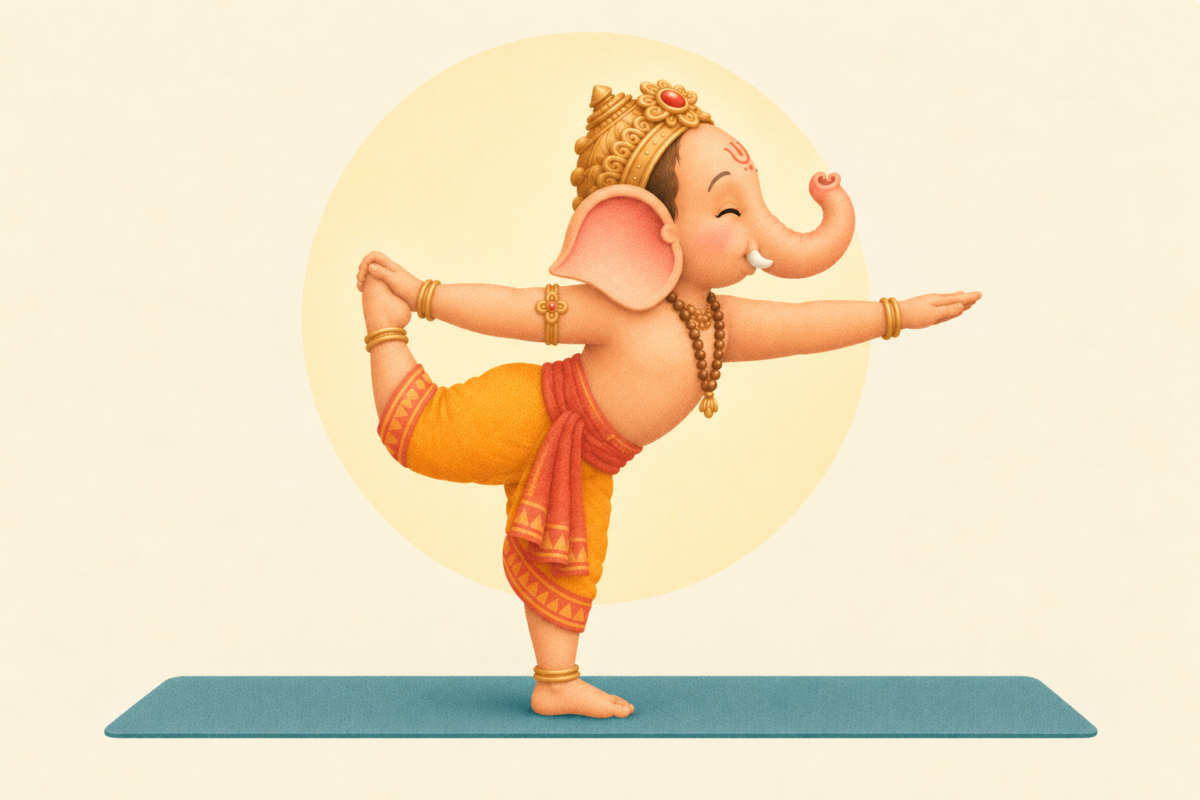 Natarajasana (Dancer Pose) challenges single-leg balance while the lifted leg moves behind the body. The standing hip and gluteal muscles help stabilise the pelvis, while the lifted leg introduces hip extension potentially stretching the hip flexors, especially the iliopsoas, depending on pelvic position.
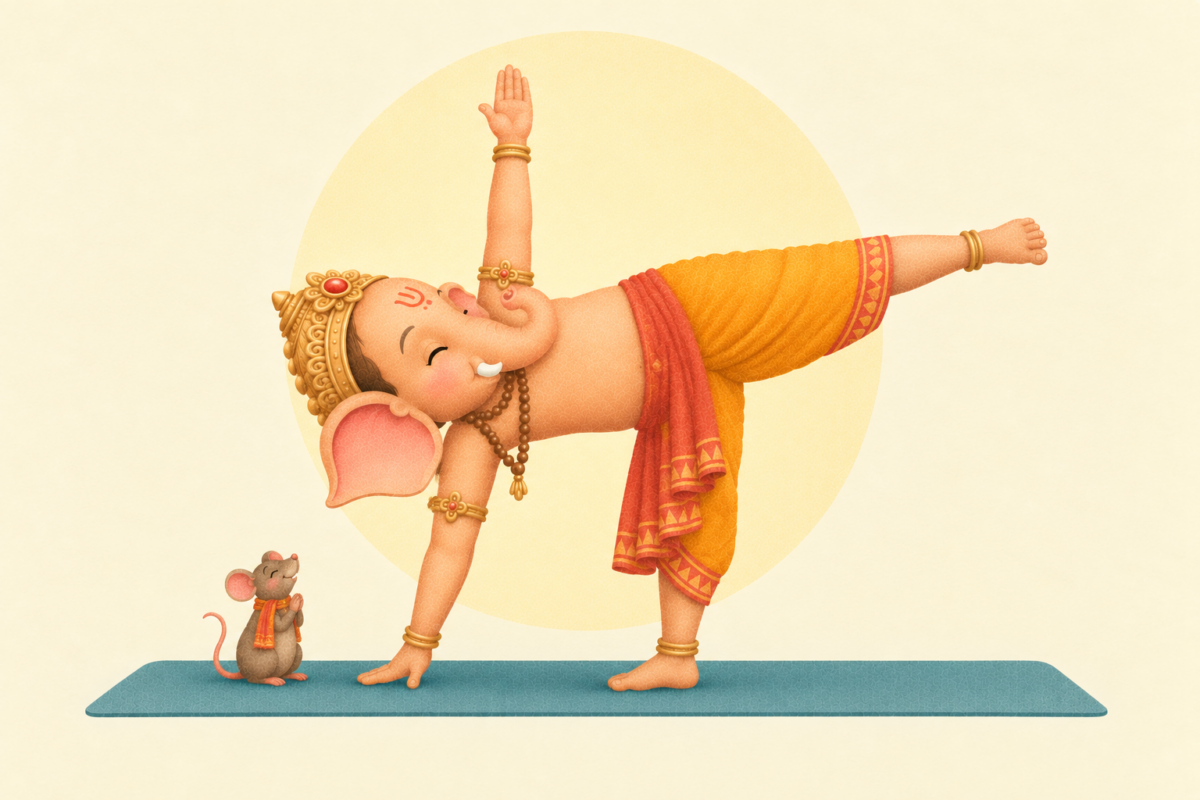 Ardha Chandrasana (Half Moon Pose) challenges balance and lateral hip control. The gluteus medius of the standing leg helps keep the pelvis level, while the gluteal muscles work with the core and other hip stabilizers to maintain alignment. Rather than simply stretching after a ride, this posture invites us to pay attention to how we support ourselves from the hip.
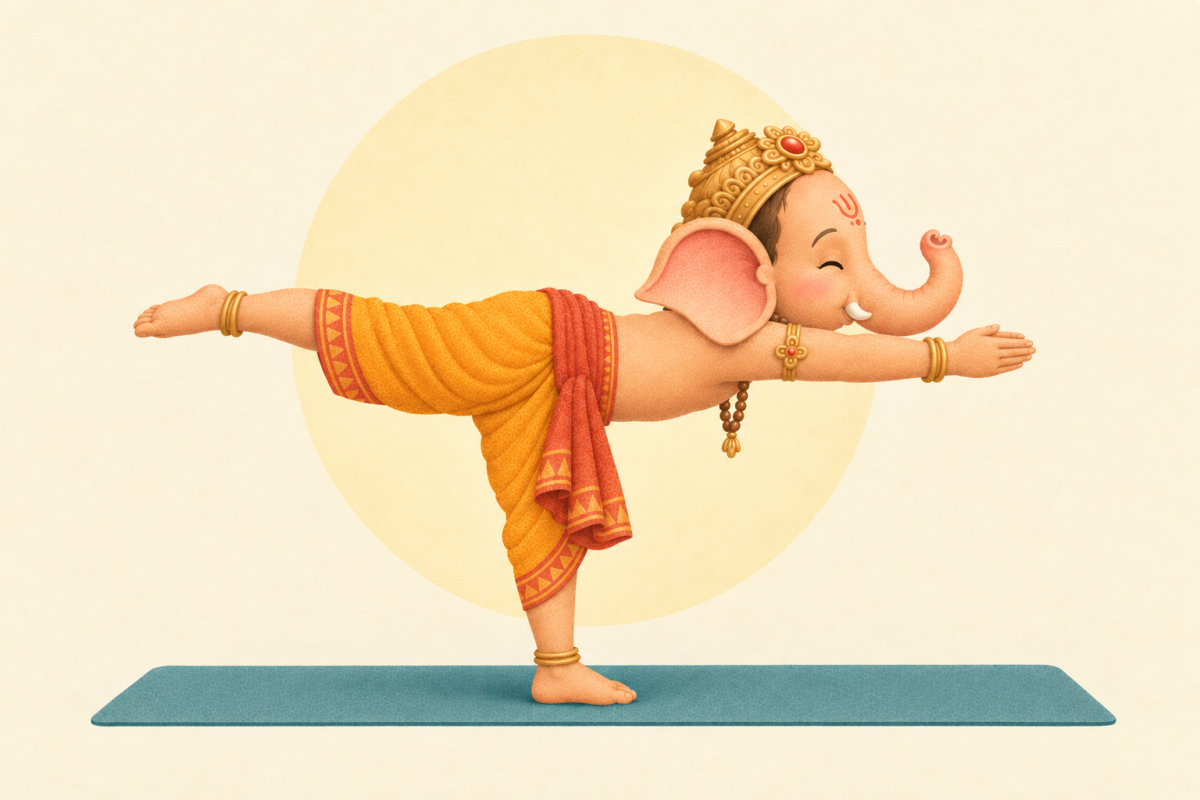 Virabhadrasana III (Warrior III) requires the standing leg and hip muscles to support the body as the torso and lifted leg extend towards a horizontal position. It challenges balance and coordination while engaging muscles throughout the posterior chain.
These poses aren’t substitutes for a structured strength-training programme, particularly for cyclists seeking greater power or performance. But they can add something valuable: awareness of how the body stabilises itself when the demands become less predictable.
4. Proprioception: Our Hidden Superpower on the Bike
Proprioception is our body’s internal sense of position and movement. It helps us recognise where our limbs are in space, how our joints are moving, and how much force our muscles are producing without needing to look at them.
It is one reason we can ride a bike without consciously calculating every movement of our legs.
Yoga offers an opportunity to train body awareness through slow transitions, balancing postures, and sustained attention to alignment.
As you practise a challenging pose, your nervous system continuously adjusts muscle activity to help you maintain balance. You begin to notice subtle differences: one hip rising higher than the other, a foot shifting its weight, or a shoulder creeping towards the ear.
This awareness may also prove useful on the bike.
Imagine repeating a slightly uncomfortable movement thousands of times. Perhaps one knee moves differently from the other, or fatigue gradually changes the way you hold your shoulders.
Greater body awareness can help you notice these changes and respond earlier. You might adjust your posture, reduce your effort, take a break, or investigate whether your bike fit needs attention.
That doesn’t mean yoga automatically prevents overuse injuries, nor can we assume that every small asymmetry is harmful. Human bodies are naturally asymmetrical, and cycling injuries have many contributing factors.
But learning to pay attention to your body is a valuable skill in its own right.
Ultimately, proprioception brings us back to the central lesson of Yoga: constant awareness comes before change.
And that lesson extends far beyond the physical body.
Last posts
Yoga and Cycling : How Yoga Made Be A Better Cyclist
Part I: The Body — How Yoga Complements Cycling How yoga can improve mobility, body awareness and balance on and off the bike. I used to think that cyclists in [...]


My week at the Divine Life Society (Sivananda Ashram) : Part III
"Sow love, reap peace. Sow meditation, reap wisdom" - Swami Sivananda From Hatha Yoga to Bhakti Yoga I practise Yoga postures (Yoga Asanas) almost every day, even if it’s just [...]


My week at the Divine Life Society (Sivananda Ashram) : Part II
“Fewer the thoughts, greater the peace.” Swami Sivananda Arrival at the Ashram After a long journey by bus and then by rickshaw, I arrived in front of this orange facade [...]



My Week at the Divine Life Society (Sivananda Ashram, Rishikesh) Part I
"Let your eyes look with kindness, your tongue speak with sweetness, and your hand serve with softness" Swami Sivananda During my last trip to India, I had the incredible opportunity [...]


Serving a Vipassana Course: The Ultimate Yoga Practice
Anyone who has completed a 10-day Vipassana course alongside a dedicated yoga practice will tell you: Vipassana is the holy grail of Yoga. You can read about my first Vipassana [...]

Yoga Is Not Everything
When I chat with students or people who would like to start Yoga, I sometimes hear: "I need to do yoga." This use of the word "need" makes me thoughtful. [...]

Beyond the Postures: Svadhyaya and the Practice of Looking Within
"svādhyāyād iṣṭadevatā-samprayogaḥ" Sutra II.44, Yoga Sutras, Patanjali "From self-study comes communion, or alignment, with one's chosen deity or higher ideal" This sutra (verse) gives the explanation of the concept of [...]


Teaching Yoga in a Resort in Cambodia
I moved to Cambodia with a naive dream: to connect with my roots. Being born in Paris to Cambodian parents, growing up in France, and studying in Germany. I was [...]


Is Yoga A Sport?
Yoga Is Not a Sport - Said My Doctor I started Yoga with a few irregular sessions in a yoga studio in North Shore Auckland and online. At the time, [...]
My First Vipassana Retreat
On a quiet night beneath the Bodhi tree, Gautama Buddha closed his eyes—not to escape the world, but to see it so clearly that suffering itself dissolved. My journey from [...]