
My first Yoga Training in Bharat, India
“In the land where yoga was born, the silhouette of Shiva in meditation and asana whispers a timeless truth: mastery begins in the body, but blossoms in the mind.”
Arrival on the Land of Yoga
After having practiced Yoga for several years in different countries, from Indonesia to New Zealand, I decided to discover Yoga in the country where it was born: India.
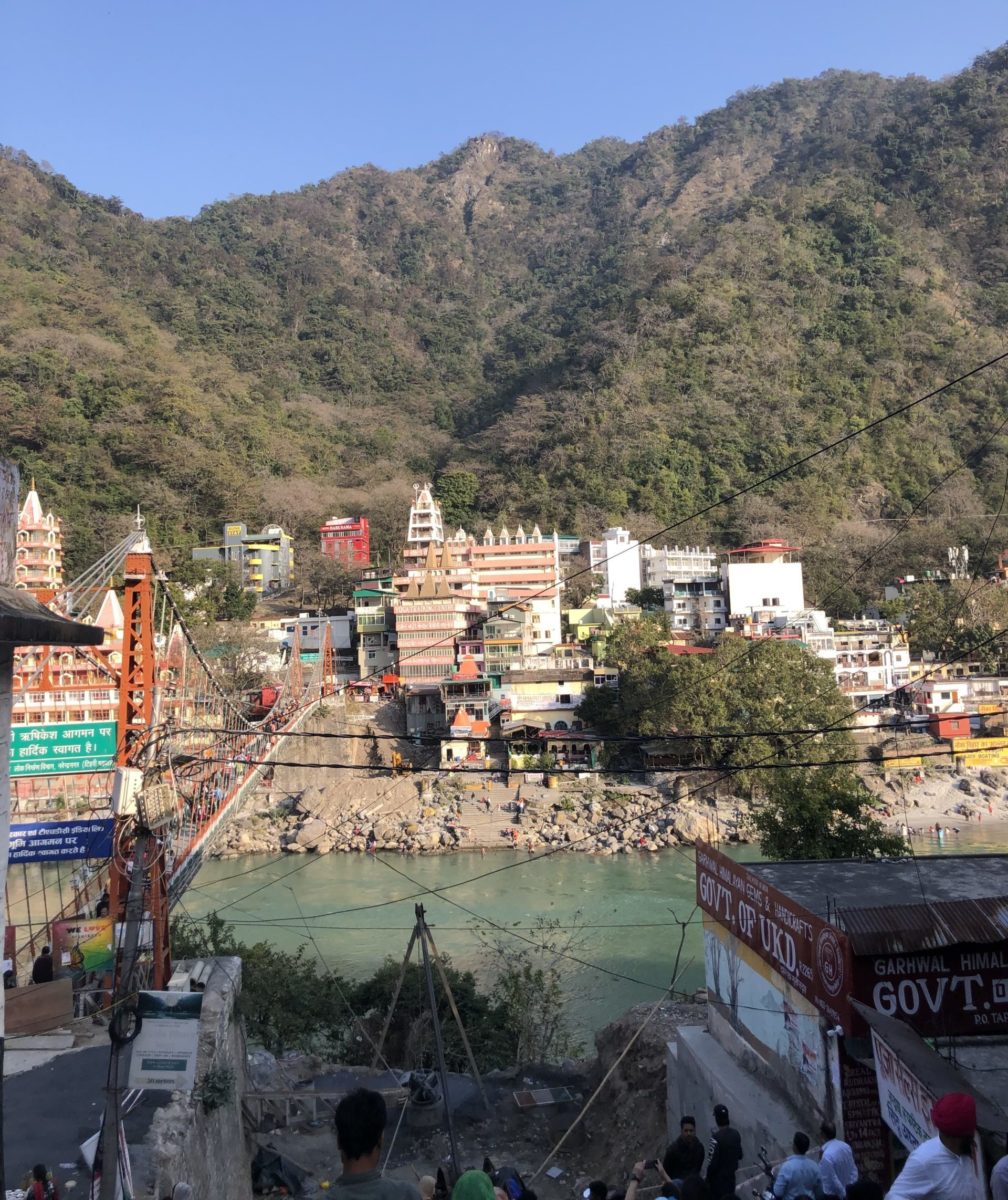
It was on a very cold late winter morning, at the end of February, that I landed in Delhi and continued on to Rishikesh, the city often called the capital of Yoga, at the foothills of the Himalayas.
As the plane was taking off from the runway at Delhi airport, I was mesmerized by the muted pink sky, almost unreal despite the coolness of the morning. Later, I would understand that this color was partly due to pollution. At the time, it was simply my first image of India. I remember thinking: it’s not so bad after all.
I went directly from the airport to the Yoga school, where I would train for a whole month. I was impressed by the taxi’s ease and agility as it sped down the narrow, crowded alleyways. I was one of the first to arrive at the school. I was exhausted. I went straight to bed feeling a bit homesick.
At the end of the day, I met some of my future training companions. We walked through the streets of Rishikesh. There were many cars, horns blaring everywhere, and hardly any sidewalks. We walked along the edge of the road while cars passed very close to us. I was far from the orderly roads of France or New Zealand.
And yet, I felt incredibly good here. I felt at home.
A New Way of Practicing
The physical sessions began the very next day: two hours a day. Hatha yoga in the morning, Ashtanga in the evening. My body took a few days to adjust to the time difference. I, who thought of myself as athletic, fell ill. I had to miss an Ashtanga class.
Shut away in my room, I stepped out onto the small balcony and heard the voice of the Ashtanga teacher, Sachin ji, chanting the opening mantras. The students repeated each line in unison. Most of them were Indian and Hindus. There was a vibrant enthusiasm in their voices, mixed with the deep, steady voice of the teacher. I got goosebumps.
It was at that precise moment that I realized I was practicing Yoga in India. And that even if I was not in the hall, even if my body was not able that day, it is with the heart, above all, that yoga is practiced.
I returned to class the following week. Gradually, the body grew stronger and more supple. The muscles firmed, the joints stabilized, and at the same time, the mind became lighter, more flexible.
However, I then understood that it was not only the practice of asanas that was creating these subtle and profound changes. It was also the immersion in this completely opposite culture, another way of living and feeling.
Falling asleep to the constant honking of cars, the barking of dogs, and the constant sounds of the city would have been unthinkable for the light sleeper I used to be. Yoga, like India, pushes us out of our comfort zone. It asks us to observe, and to embrace discomfort.
Ashtanga Yoga : Dancing with Fire
Each session began with two Surya Namaskars performed a few times (in english, sun salutations are a set of yoga postures synchronized with the breath), followed by four or five new postures introduced by the teacher.
We held postures for long periods (very very long) in preparation for the new final pose.
The teacher counted slowly, moving between rows, adjusting each student with patience. The hall was immersed in silence, save for the groans and sighs rising from my companions. I could hear my heart beating and my breath slowly filling my lungs.
The daily practice felt like a Revelation. I rediscovered postures I had practiced hundreds of times before, yet it felt as if I were doing them for the first time. I realized that, before, I had no real awareness of my body. I relied on my innate flexibility, on the strengths of a young and capable body.
Here, I discovered the true meaning of balance. An honest balance between each group of muscles. A subtle alignment, an attention to detail. A way of staying present.
The Ashtanga sessions were intense. Few movements, few postures, but total presence. Every muscle was awake and engaged. I thought I was athletic and fit, but here the practice showed me what deep strength really meant.
I was fascinated by the effects of the postures on the mind and on the body.
I was asking myself : what in particular makes that practice different and so much more powerful than past practices I had ? Was is my mood ? The teacher’s tone ? The duration of how long a pose is hold ?
All these questions were slowly shaping the teacher and practitionner I was to become. Like a chef and an orchestra conductor, a Yogi must find the perfect balance of intensity, fire, and rhythm to create the deepest change in both mind and body. Jumping quickly from one posture to another, like in many modern fitness classes cannot create what Yoga is truly designed for.
That is : ”Yogah citta vrtti nirodhah” : ”Yoga is the cessation of the fluctuations of the mind”
Philosophy and Patience
Alongside the physical practice, we had one hour of philosophy every day. At first, I felt some resistance. For me, yoga was above all physical. The rest seemed abstract, unnecessary.
With hindsight, I simply understand that I was not ready.
It would only be a few months later, in another place – ironically, in a big, crowded Indian city rather than at the foot of the Himalayas – that the philosophy of Yoga would slowly start to take on meaning for me. As we say in french ”chaque chose en son temps’‘, one thing at a time.
But that is another story.
Discovering a Yoga Sangha
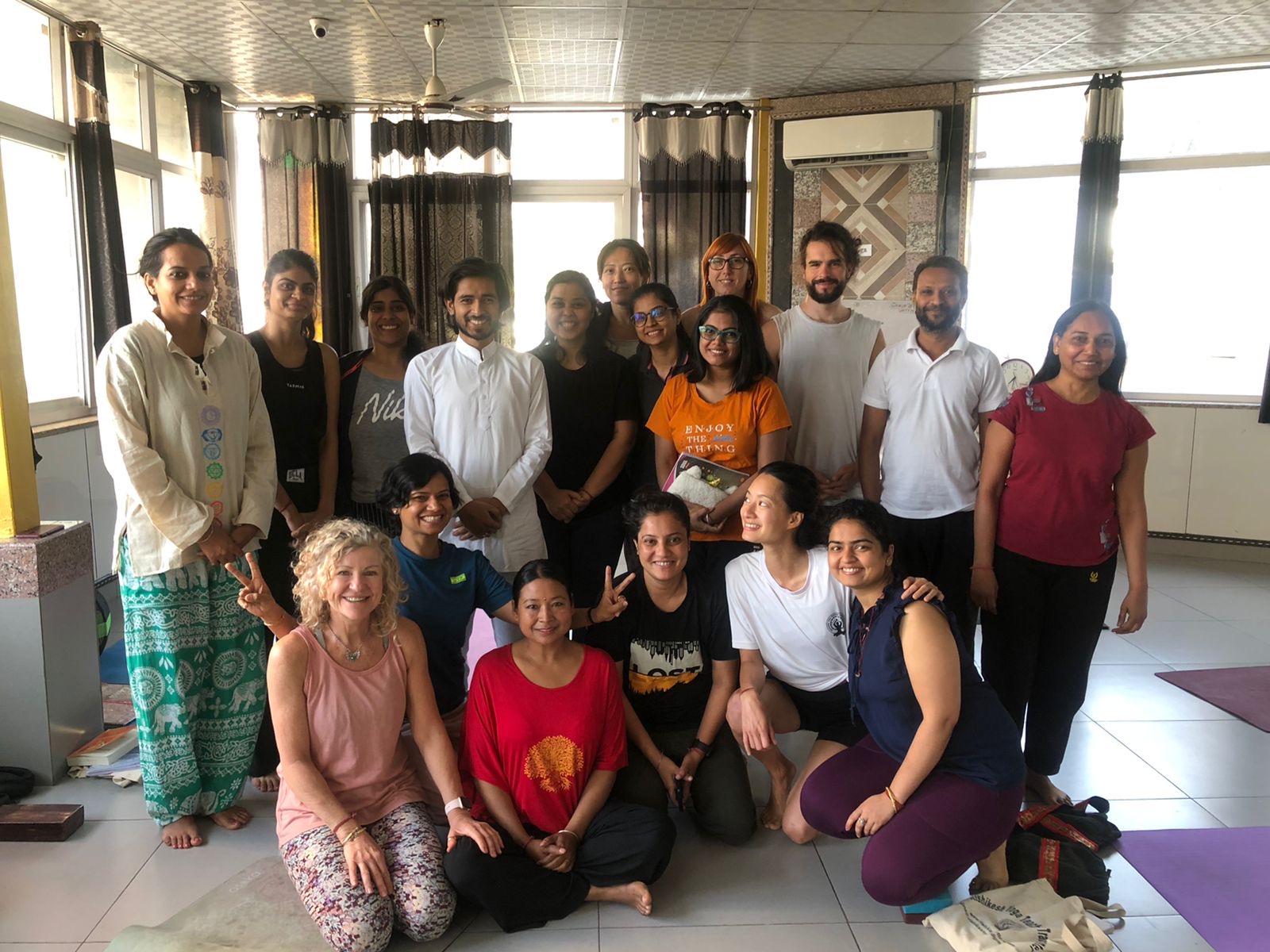
Over the days, what Buddhists call a sangha (a community) started forming among all of us. My batchmates and I all had different levels of practice, and even though this was an intensive Teacher Training, the vast majority were not planning to become Yoga teachers. Some of them were here to get fitter and healthier.
Most Yoga studios I had been to before this training all had something in common: they were terribly formal, and students were quite cold toward newcomers. Like in high school, the women seemed to size up new students as rivals rather than allies. A complete contrast to the Yoga I had envisioned: a place of solidarity, peace and inner work.
Here in India, I had feared running into the same dynamic. After all, it was an intensive teacher training. Fortunately, I discovered that the Indian students who were the most advanced on the mat had no sense of competition. All students clapped every time someone managed to get into a ”difficult” posture.
There was only one student who seemed a bit grumpy when others succeeded in a posture: a young Austrian male with a beard and a ponytail. It reminded me how much ego and competitiveness can sometimes sneak and how refreshing it was to see the opposite here.
Don’t Believe What They Say: Reality vs. Prejudices
Before my solo trip to India, friends and family warned me, with genuine concern and a hint of cynicism, that India was a very dangerous country for women.
Even though I traveled to the four corners of the globe alone, their thoughts somehow took root in a quiet corner of my mind.
After that month of Yoga training, I decided to extend my stay. I had fallen in love with the Indian culture, but Rishikesh was just one city. I wanted to keep exploring the country while learning Yoga, with different teachers and therefore different styles (there are as many styles of yoga as there are teachers).
I first went to Sri Lanka ”for a break”, where I started my days with Sun Salutations/Surya Namaskars on the beach at sunrise. I spent the rest of the days reading books about Yoga, Indian history and culture and exploring the country. After a month on the island, I returned to India. I started in the south and slowly made my way up North to the small villages in the Himalayas.
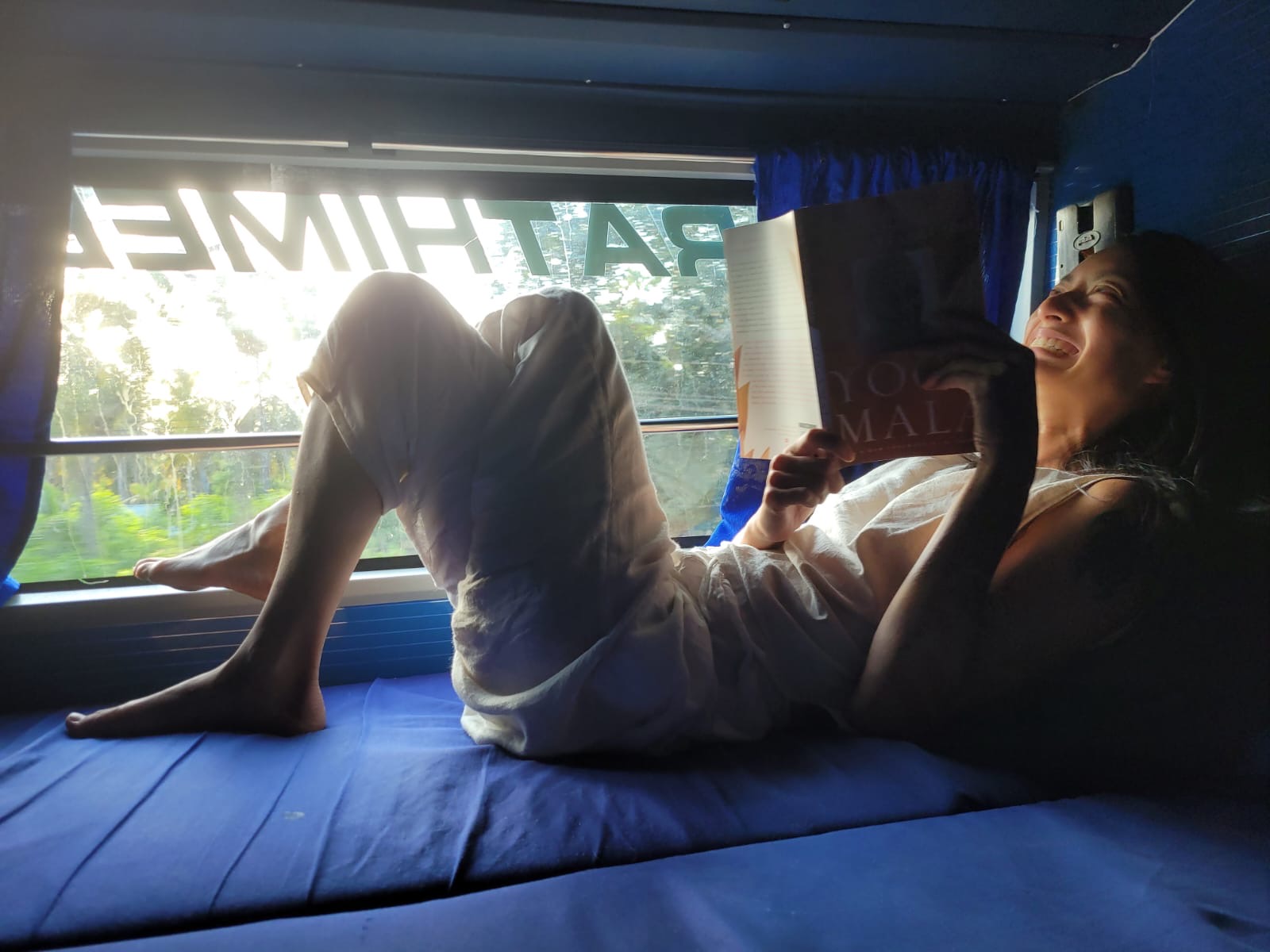
I traveled exclusively by buses and trains. Some train journeys lasted an entire day or even a night or two. Sometimes, I was the only woman on the bus. I would sometimes remember what people had told me before my departure, and yet, once on these buses, I often found myself under the protection of my neighbors, who made sure the bus didn’t leave without me at each stop.
One day, on a local bus packed and ready to explode like a Tokyo subway at rush hour, I had a very urgent need to go to the bathroom. My neighbors, either out of compassion or maybe out of fear of a terrible accident in which they could be near victims, asked the driver to stop for me in the middle of the journey : right there, in the middle of the Indian countryside !
It was these small moments – not exceptions, but experiences I constantly had – that showed me that Yoga is lived first and foremost in the hearts of people: in their generosity, their care, and their sense of welcome.
The end of the training and the beginning of a new chapter
I left the capital of Yoga with a new way of practicing. The level of teaching set high standards for me, and from that day on, I never compromised on my Yoga practice when practicing with a teacher. (I have written another article about the exceptional teacher I had in Rishikesh : Sonu ji in Ode to my Gurus)
Rishikesh was the perfect place to practice Yoga in India for a month.
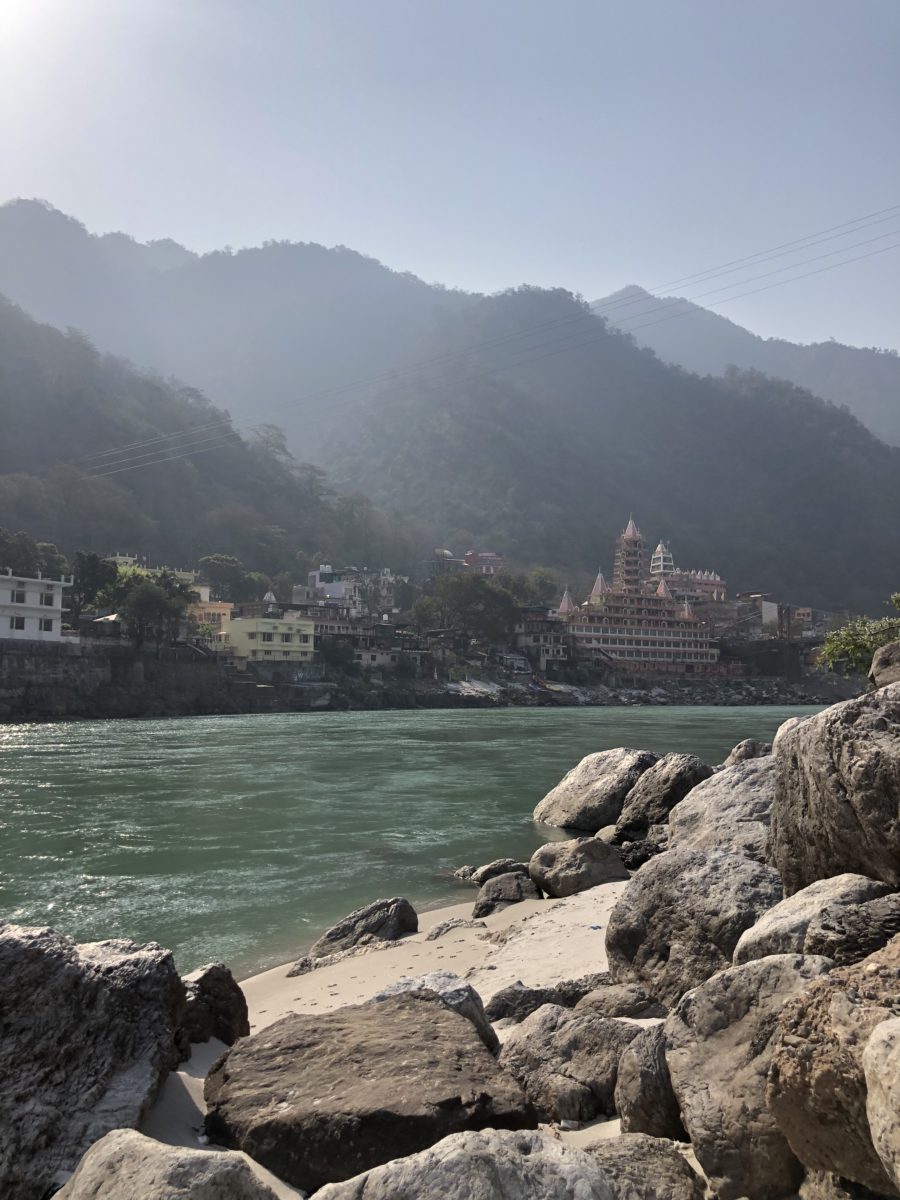
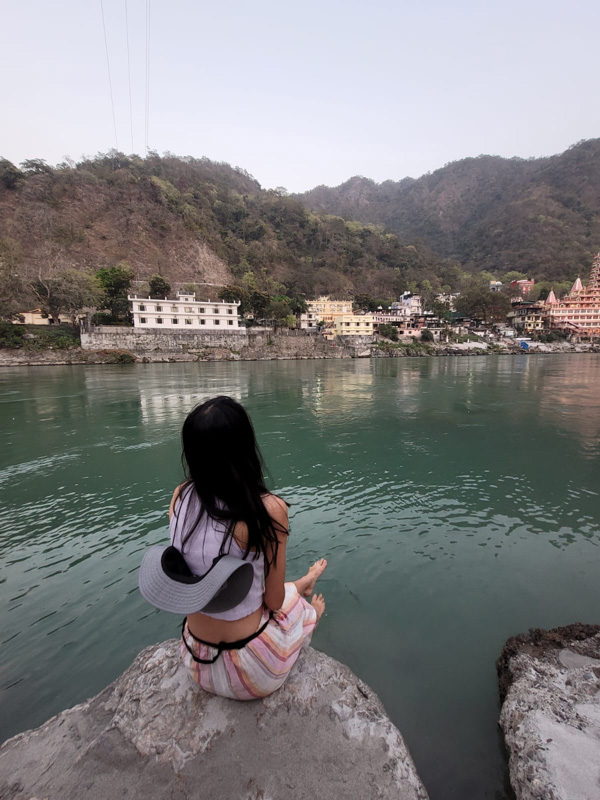
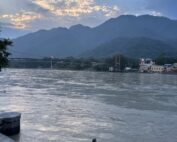
During the morning breaks between classes, I would walk to the banks of the Ganga River to meditate. It felt incredibly simple and natural to sit by such a powerful yet soothing river. I had always heard about how Hindus worship this river. Now, I finally understood.
Last posts
Yoga and Cycling : How Yoga Made Be A Better Cyclist
Part I: The Body — How Yoga Complements Cycling How yoga can improve mobility, body awareness and balance on and off the bike. I used to think that cyclists in [...]

My week at the Divine Life Society (Sivananda Ashram) : Part III
"Sow love, reap peace. Sow meditation, reap wisdom" - Swami Sivananda From Hatha Yoga to Bhakti Yoga I practise Yoga postures (Yoga Asanas) almost every day, even if it’s just [...]
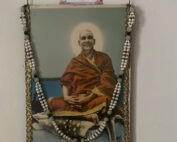

My week at the Divine Life Society (Sivananda Ashram) : Part II
“Fewer the thoughts, greater the peace.” Swami Sivananda Arrival at the Ashram After a long journey by bus and then by rickshaw, I arrived in front of this orange facade [...]
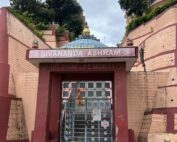
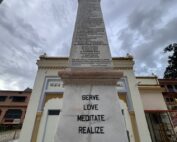
My Week at the Divine Life Society (Sivananda Ashram, Rishikesh) Part I
"Let your eyes look with kindness, your tongue speak with sweetness, and your hand serve with softness" Swami Sivananda During my last trip to India, I had the incredible opportunity [...]
Serving a Vipassana Course: The Ultimate Yoga Practice
Anyone who has completed a 10-day Vipassana course alongside a dedicated yoga practice will tell you: Vipassana is the holy grail of Yoga. You can read about my first Vipassana [...]

Yoga Is Not Everything
When I chat with students or people who would like to start Yoga, I sometimes hear: "I need to do yoga." This use of the word "need" makes me thoughtful. [...]

Beyond the Postures: Svadhyaya and the Practice of Looking Within
"svādhyāyād iṣṭadevatā-samprayogaḥ" Sutra II.44, Yoga Sutras, Patanjali "From self-study comes communion, or alignment, with one's chosen deity or higher ideal" This sutra (verse) gives the explanation of the concept of [...]


Teaching Yoga in a Resort in Cambodia
I moved to Cambodia with a naive dream: to connect with my roots. Being born in Paris to Cambodian parents, growing up in France, and studying in Germany. I was [...]


Is Yoga A Sport?
Yoga Is Not a Sport - Said My Doctor I started Yoga with a few irregular sessions in a yoga studio in North Shore Auckland and online. At the time, [...]
My First Vipassana Retreat
On a quiet night beneath the Bodhi tree, Gautama Buddha closed his eyes—not to escape the world, but to see it so clearly that suffering itself dissolved. My journey from [...]